UNAMA and Taliban Officials in Helmand Stress Opium Crop Alternatives
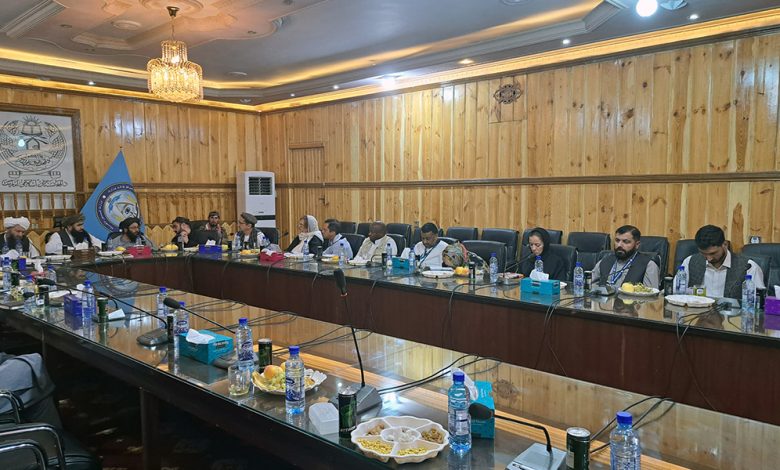
A UNAMA delegation, in talks with Taliban officials in Helmand, stressed the need to provide farmers with legal and sustainable alternatives to opium cultivation, expand health services, and secure funding for development projects in the province.
The meeting was held on Sunday between Amanuddin Mansoor, the governor of Helmand, and Bruno Lemarquis, deputy special representative of the UN secretary-general in Afghanistan, at the Helmand governor’s office. Security and stability, development projects, agriculture, alternative livelihoods, markets for agricultural and industrial products, and humanitarian needs were among the main topics discussed.
According to the Helmand governor’s office, Mansoor shared the situation in the province with the UN delegation and called for greater cooperation to address the needs of local residents and expand development opportunities. He also stressed the expansion of economic projects, improved livelihoods, stronger health services, and finding markets for agricultural products.
Bruno Lemarquis said at the meeting that despite what he described as the availability of a basis for economic and development activities, improving the economic situation of the people still required more effort and cooperation. He also emphasized that providing alternative livelihoods for farmers should be pursued alongside preventing opium production.
The two sides also discussed mobilizing funds for development projects and expanding health services, and Lemarquis called for greater coordination among the relevant institutions. Members of the UN delegation also raised questions and issues related to different parts of Helmand and discussed possible solutions with local officials.
Marketing Helmand’s agricultural and industrial products, including cotton, was also among the topics of the meeting. According to the Helmand governor’s office, Uzbekistan has shown interest in buying Afghan cotton.
Bruno Lemarquis was accompanied on the trip by Susan Ferguson, the UN country representative for gender equality and women’s empowerment in Afghanistan; My-Hyang Park, head of the International Organization for Migration office in Afghanistan; Pioyak Ok Siry, head of the UN Office on Drugs and Crime in Afghanistan; and representatives from UNICEF and the UN High Commissioner for Refugees. UNAMA, or the UN Assistance Mission in Afghanistan, is one of the main UN bodies coordinating political and humanitarian activities in the country.