Afghanistan’s Health Minister Meets WHO Head to Discuss Expansion of Medical Services
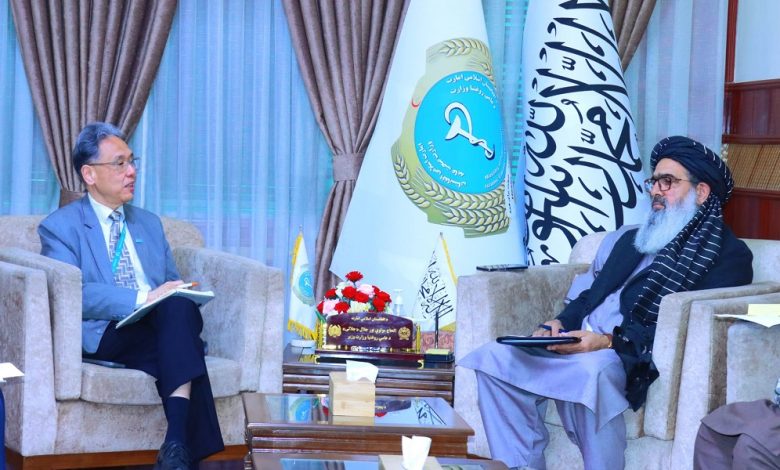
Afghanistan’s Taliban-run Ministry of Public Health has announced that Noor Jalal Jalali, the Minister of Public Health, held talks with Edwin Seniza Salvador, the head of the World Health Organization (WHO) in Afghanistan, regarding the expansion of health services and strengthening coordination efforts. The meeting was attended by several WHO officials and representatives from both sides.
According to a ministry statement, the main focus of the discussions was the development of health services throughout Afghanistan, enhancing the capacity of health workers, and establishing and improving cancer treatment services. Both parties also exchanged views on improving operational coordination, ensuring transparency in the delivery of health services, and preparing for upcoming health sector meetings.
During the meeting, the Health Minister emphasized that all health projects and programs must be designed and implemented in accordance with the ministry’s policies and strategic documents. He added that program implementation should be based on needs and priorities identified by the Ministry of Public Health.
Jalali additionally called for increased transparency in service delivery and stronger coordination between the WHO and the Ministry of Public Health. He stressed the importance of taking practical steps to improve service quality and broaden residents’ access to medical care across different regions of the country.
In response, the head of WHO Afghanistan reaffirmed the organization’s commitment to continue close cooperation with the Ministry of Public Health and to deliver essential health services in line with established policies and priorities.
This meeting comes amid ongoing challenges faced by Afghanistan’s health system following recent political developments, including financial constraints, workforce shortages, and limited access to healthcare for residents. Effective coordination between domestic and international actors remains a critical need for the sector.