Taliban Delegation Meets Belarus Officials to Discuss Industrial and Agricultural Cooperation
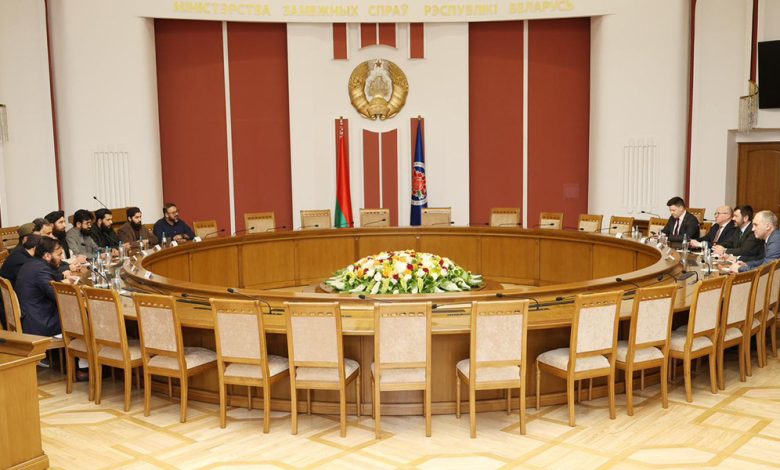
A high-ranking Taliban delegation, led by Ahmadjan Bilal, head of the Emirati Companies, and Abdulrahman Atish, CEO of the National Development Company, held meetings with officials from the ministries of foreign affairs, agriculture, and industry in Minsk during their ongoing visit. The discussions focused on political, economic, and trade issues. This visit follows the official arrival of the Afghanistan National Development Company delegation in Belarus’s capital.
Nabiullah Arghandiwal, spokesperson for the National Development Company, stated that in addition to official meetings, the delegation visited several government institutions and major industrial enterprises in Belarus. According to him, visits included state chemical services and agricultural farms under the administration of Belarus’s Ministry of Agriculture.
Based on provided information, both sides discussed expanding technical cooperation in the areas of industry, agricultural machinery, building materials production, food security, public health, and education, emphasizing strengthening long-term economic partnerships. However, no details have been released regarding the legal framework, investment volume, or implementation methods of these agreements.
This visit occurs amid serious economic challenges facing the Taliban administration, including a decline in foreign investments and extensive international restrictions, with many countries yet to recognize it officially. Economic experts stress that under such circumstances, transparency in contract signings, safeguarding national interests, and monitoring project implementation are crucial to prevent repeating past failures.
Belarus, located in Eastern Europe, has extensive experience in heavy industry and agricultural machinery sectors. Nonetheless, the success of any cooperation between Kabul and Minsk will depend on political stability, access to the international financial system, and creating conditions for broader engagement between Afghanistan and the global community.