Taliban Publicly Flogged More Than 2,700 People, Afghan Rights Group Says
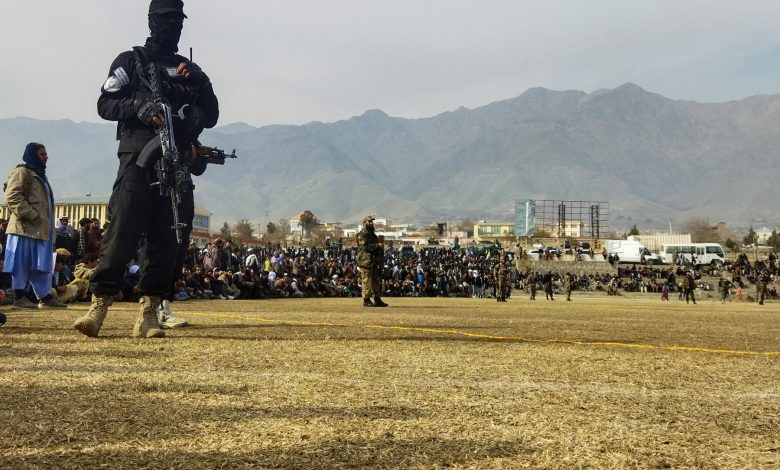
Taliban justice lashes more than 2,700 people in public
The Afghanistan Human Rights and Democracy Organization said in a new report that the Taliban administration publicly flogged 2,745 people in Afghanistan from February 2022 to April 2026. The group says public flogging during this period has become a tool of punishment, intimidation and social control.
The report, published today, Tuesday, 3 Sonbala, under the title “Whips of Power, a Display of Control: Documenting Taliban Public Floggings,” documented 634 public flogging cases. According to the group, these cases involved a total of 2,745 people.
According to the organisation’s statement, most of the documented cases were related to allegations linked to sexual offences or what were described as moral crimes. These cases include relationships, sexual behaviour and restrictions related to women’s movement.
The Afghanistan Human Rights and Democracy Organization said public flogging is often carried out in front of groups of spectators, with the result of increasing humiliation, social stigma and psychological harm for victims. The group added that the practice is enforced across Afghanistan and is increasingly used to impose the Taliban administration’s narrow interpretation of religious and social norms.
The report also referred to serious violations of due process principles. According to the group, arbitrary arrests, forced confessions and denial of access to defence lawyers, evidence and witnesses are among the documented cases linked to these punishments.
The organisation said its legal review shows that public flogging violates fundamental human rights, including the prohibition of torture and ill-treatment, the right to privacy, freedom of association and assembly, and the right to a fair trial. According to the statement, the report also identified evidence that may be linked to crimes against humanity and war crimes under the Rome Statute.
The Afghanistan Human Rights and Democracy Organization said the report was based on its documented cases as well as the personal testimony of 23 flogging victims. It stressed, however, that the report’s findings reflect the evidence available at the time of publication and should not be considered a comprehensive report on all violations or related international crimes.
The organisation concluded by calling for accountability for those responsible for public flogging and urged governments, international human rights bodies and organisations to strengthen independent monitoring, investigate these cases and support victims. The Afghanistan Human Rights and Democracy Organization is a documentation body focused on human rights violations, and its reports rely on evidence gathering and victim testimony.