WFP Warns of Worsening Food Insecurity in Afghanistan Amid Global Crises
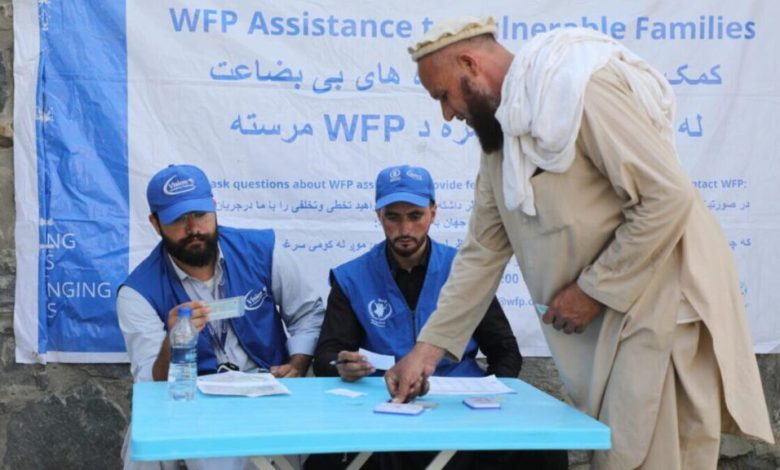
The World Food Programme (WFP), in its latest “Food Security Dynamics” report, has stated that conflicts in the Middle East and rising global oil prices have further deteriorated the humanitarian situation in Afghanistan. According to the agency, shocks caused by rising fuel and food costs, declining incomes, and trade disruptions are exerting direct pressure on food security and livelihoods of families, a trend that continues unabated.
This assessment, covering Afghanistan, Somalia, and Sri Lanka, indicates that even if tensions in the Middle East ease, the economic repercussions will continue to cast a shadow on the food situation in these countries in the coming months. The WFP emphasized that the impact of this crisis is increasingly evident in the lives of vulnerable groups.
Simultaneously, the American organization Data For Afghanistan reported that more than 11 million people in Afghanistan will face crisis-level or worse food insecurity this calendar year. According to this report, from April to September 2026, these individuals fall into phase 3 or above of the Integrated Food Security Phase Classification (IPC), which includes “crisis,” “emergency,” and “catastrophe” situations.
The report states that workers in many parts of the country still cannot afford basic food items and that declining purchasing power has become a fundamental challenge. Experts have repeatedly warned that the absence of effective economic policies and widespread restrictions on women’s work and activities under the Taliban administration have contributed to economic stagnation and reduced household incomes, exacerbating vulnerability.
According to this evaluation, the provinces of Badakhshan, Balkh, Bamyan, Daykundi, Faryab, Ghor, Jawzjan, Kunar, and Sar-e-Pul are among the most vulnerable areas in the country. In these provinces, at least 40% of the affected population is in crisis or worse conditions.
Jawzjan has recorded the highest level of severe food insecurity, where half of the vulnerable population faces crisis-level or higher food insecurity. Following are Faryab, Daykundi, and Ghor, each with 45%, and Bamyan, Balkh, Sar-e-Pul, Kunar, and Badakhshan with approximately 40%, all listed among provinces at high risk of food insecurity.
Aid organizations warn that without immediate support and the creation of sustainable employment and income opportunities, the food crisis in Afghanistan could escalate further, placing millions more residents at risk.