The End of Hereditary Borders: Redefining Divisions in Today’s World
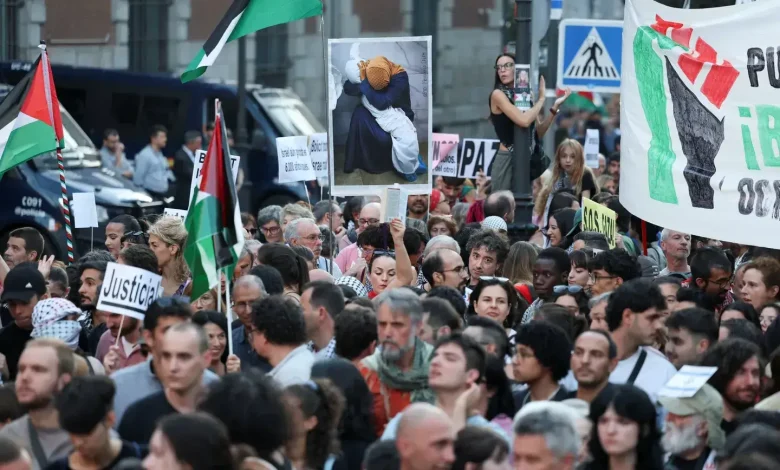
Understanding today’s world through old maps is no longer possible. Boundaries once drawn based on religion, nationality, or race have gradually lost their effectiveness. Not that these identities have completely disappeared, but they no longer explain the deep and real divides among people. What is emerging now is a new and fundamental kind of boundary; a boundary that passes through ethical choices and human stances.
The world today can broadly be seen as divided into two fronts: one where power, dominance, discrimination, and disregard for human dignity are perpetuated, and another that emphasizes resistance, justice-seeking, and defending human dignity. Unlike the past, this division is no longer dependent on individuals’ official identities. Neither religion guarantees being on the ‘right side,’ nor does atheism automatically place someone on the ‘wrong side.’ What determines one’s position is the conscious choice a person makes when confronting injustice and truth.
Within this framework, a person who claims no religious affiliation might practically stand with those fighting for justice, freedom, and equal human rights, whereas someone belonging to a religious tradition might participate in structures that reproduce inequality and oppression. This apparent contradiction actually signals a deep shift in the standards of judgment. The new dividing line between people no longer depends on any of the old symbols. Contemporary humans are either on the ‘front of arrogance’ or the ‘front of resistance,’ and religion, sect, or former boundaries can no longer define the profound divides between people.
This shift in criteria has important consequences. First, it underscores personal responsibility. No one can hide behind labels anymore. Nobody is immune from criticism or inherently justified solely because of group membership. Every individual determines their place in this dichotomy through their decisions and actions. Second, it enables synergy among people from different backgrounds. Those who might have been on opposite sides of a religious or ethnic boundary in the past can now stand together on a shared front defending human values.
To see today’s world realistically, we must accept that the era of defining people by traditional categories has ended. The main question now is not ‘Who are you?’ but rather ‘What do you do in the face of injustice?’ The answer to this question draws the boundaries: alive, dynamic, and based on action rather than mere labels.
Seyed Mostafa Mousavi