Hezbollah Rejects Direct Talks with Israel, Vows to Retain Weapons of Resistance
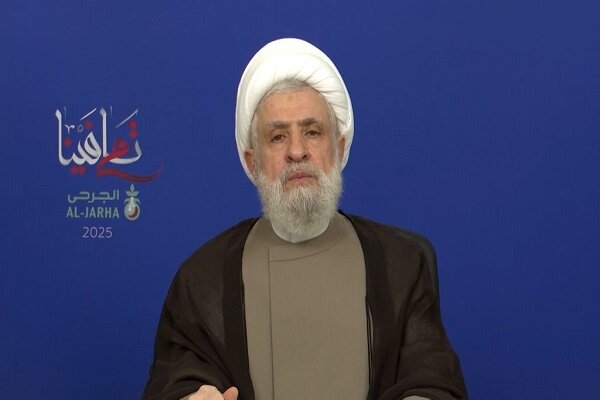
Sheikh Naim Qassem, Secretary-General of Lebanon’s Hezbollah, declared in a televised speech that the movement completely rejects direct negotiations with Israel and will not relinquish its weapons of resistance. He emphasized that, according to Hezbollah’s belief, Israel has reached a deadlock and is incapable of defeating the resistance.
Qassem criticized the approach of the Lebanese government, stating that the current authority’s actions are not in Lebanon’s interest, ignoring the rights of the Lebanese people and the country’s territorial integrity. He added that officials must return to the people’s demands and align decision-making within the framework of national interests.
The Hezbollah chief described the halt of direct talks and the return to indirect negotiations as the “duty of the government,” and noted that from Hezbollah’s perspective, the results of direct negotiations appear “nonexistent” and disconnected from the resistance. He also questioned whether some factions intend to side with Israel against their own people.
He asserted that the weapons of resistance were created to confront aggression and defend Lebanon’s existence and will not be discarded. Qassem stated that no party other than the Lebanese people themselves has the right to decide the country’s fate.
Referring to the “Ouli al-Baas” operations starting September 23, 2024, and “Al-Asf al-Ma’kul” on March 2, 2026, he said these actions have changed the field equations, surprising Israel and its supporters. According to him, despite U.S. support for Israel, efforts to weaken Hezbollah and its popular base have failed.
He cited resilience, diverse combat methods, and popular support as factors behind Israel’s failures and added that the resistance stands alongside the Amal Movement and other nationalist currents, honoring the blood of martyrs.
The Hezbollah leader identified the solution to the crisis as stopping aggression, Israel’s withdrawal from disputed lands, freeing prisoners, the return of refugees, and Lebanon’s reconstruction, while emphasizing national unity to overcome the crisis.
Qassem also stated that without Iran’s insistence on regional diplomatic processes following the Lebanese resistance, a ceasefire would not have been achieved—a remark reflecting the role of regional actors in Lebanon’s developments.