UN Rights Expert Warns Against EU Hosting Taliban Officials in Brussels
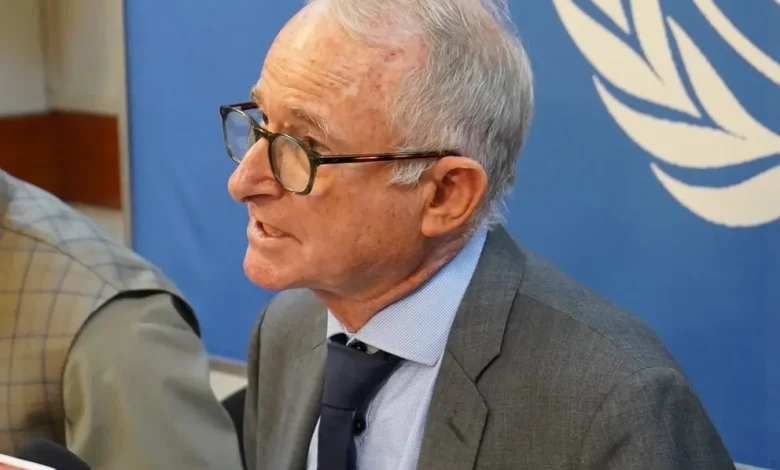
Richard Bennett, the UN Special Rapporteur on human rights in Afghanistan, has expressed deep concerns over the European Union’s decision to host Taliban officials for talks on the deportation of Afghan refugees. He warned that any forced returns to Afghanistan under current conditions could constitute a violation of the principle of non-refoulement.
In a post on the social media platform X, Bennett emphasized that given the widespread human rights abuses in Afghanistan, especially against women, human rights defenders, and former government employees, forced deportations would expose these individuals to serious danger. The principle of non-refoulement is a fundamental tenet of international refugee law that prohibits countries from expelling people to unsafe places.
According to reports, the European Union is set to invite a delegation from the Taliban administration to Brussels in the coming weeks to discuss the process of deporting Afghan refugees. This move comes despite repeated warnings from human rights organizations about the dire human rights situation in Afghanistan.
Meanwhile, Gilles Bertrand, the EU Special Representative for Afghanistan, has traveled to Kabul. The Taliban’s Foreign Ministry stated that he met with Mohammad Naeem, the ministry’s deputy, to discuss expanding political, economic, and trade relations, as well as developing sustainable cooperation.
In response to these developments, Hannah Neumann, a member of the European Parliament, strongly criticized reports about the possible visit of Taliban officials to Brussels, stating that no legitimacy or deal with the Taliban is acceptable. She added critically that EU officials should not roll out the “red carpet” for the Taliban.
As the Taliban administration continues to face broad international criticism for severe restrictions on women’s rights and their exclusion from many educational and work sectors, any official engagement without considering human rights concerns could raise serious questions among the public and human rights advocates.