Central Asia Water Security Summit Held with Taliban Representative in Attendance
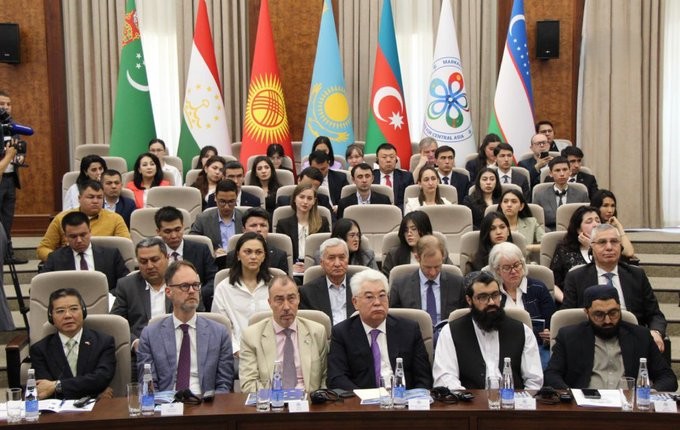
A scientific and strategic meeting on “Water Security” in relation to climate change in Central Asia was held with the participation of regional research institutions and Abdulhai Qanet, head of the Strategic Studies Center of the Taliban administration.
The event was initiated by the International Institute for Central Asian Studies and the International Water Management Institute, focusing primarily on the challenges of water scarcity and the management of water resources across the region. In his speech, Abdulhai Qanet addressed water management and the existing challenges in regional cooperation.
Participants in the summit identified water shortage, melting glaciers, and the negative consequences of climate change as among the most significant threats facing Central Asian countries. They stated that if these trends continue, agriculture, energy production, and the livelihoods of millions of residents in the region could be directly affected.
The meeting emphasized that water security is not solely the concern of any single country; all countries in the region must collaborate for the fair distribution and sustainable management of water resources. However, experts have consistently stressed that achieving such cooperation requires transparency, comprehensive participation, and knowledge-based policies—issues that Afghanistan, under Taliban administration, faces structural limitations and a lack of specialized capacities in addressing.