Taliban’s Policies Lead to Shia Persecution and Recent Bloodshed in Herat
From Law to Massacre
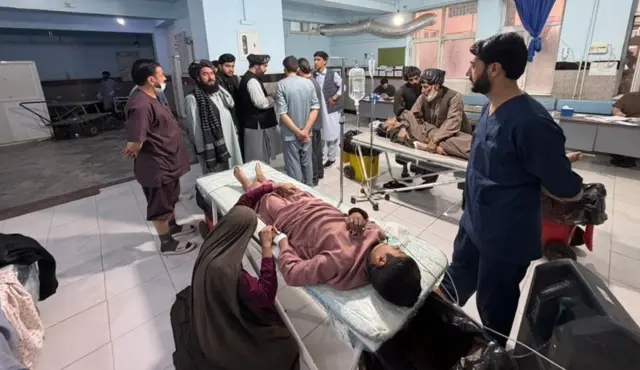
The recent crime and killing of Shia in Herat is the result of the policy adopted by the Taliban.
About two weeks ago, at the beginning of the academic year, the Taliban handed out a pledge to university students, in which the sixth clause required students who are not Sunni to convert to the Sunni faith to continue their studies.
Amid the US and Israeli aggression against Iran, few paid attention to this significant issue.
Earlier, the Taliban’s penal code explicitly stated that followers of sects other than the Hanafi school are considered “heretics.” Another clause in the same code prescribes severe punishments for those whom the Taliban regard as heretics.
Last year, the Taliban transformed what their leaders had previously described in their books as “virtues and vices” into enforceable legal codes within governmental institutions.
In the Taliban’s judicial system, being Shia is inherently treated as a crime. This is a harsh reality imposed on a large portion of Afghanistan’s population by a Salafi Umayyad government through legal codification.
When being Shia is criminalized in the Taliban’s penal system, forcing Shia students to convert to continue their education is considered a trivial matter.
Under such a regime, the killing of Shia women and children will not provoke any reaction from the authorities, because from the Taliban judge’s perspective, the killer has eliminated a “potential criminal” due to their heresy, and this is not considered reprehensible.
The problem in Afghanistan has shifted from an ethnic to a religious crisis, with the Taliban’s Salafi ideology being the source of this turmoil. Blaming other terrorist groups for crimes like the recent killing in the Injil district of Herat does not change the truth of the matter.
As long as the Taliban remain in power, Shia in Afghanistan will not see peace.
The idea of Shia engagement with the Taliban was a mistake that destroyed many of their opportunities and capacities. Now that the Taliban have expanded their control, creating new capacities has become very difficult.
Afghan Shia must prepare for a period resembling the era of Hajjaj ibn Yusuf Thaqafi and align their methods of survival with those used by Shia in that period.
Seyyed Ahmad Mousavi, Cleric