Thousands of Earthquake Survivors in Eastern Afghanistan Still Living in Tents
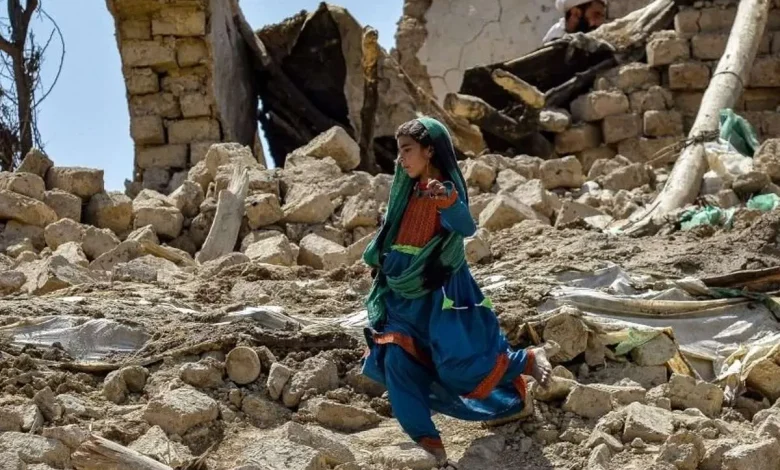
Field reports indicate that a large number of victims of the 2025 earthquake in eastern Afghanistan, especially in the Nurgal district of Kunar province, continue to live in tents. They complain about the shortage of clean drinking water, lack of proper health services for children, and loss of their income sources.
Accurate statistics on the total number of reconstructed homes in the provinces of Kunar, Nangarhar, and Laghman, as well as the budget spent, have not been released. The Norwegian Refugee Council previously warned that reduced humanitarian funding has made it more difficult to continue essential services and provide shelter for those affected.
The United Nations Development Programme (UNDP), in a report marking the first anniversary of the earthquake, announced that with financial support from South Korea, it has helped build 203 shelters for vulnerable families and two earthquake-resistant health centers. The agency also reported clearing debris, reconstructing some water supply facilities, restoring agricultural land, and creating temporary job opportunities.
On November 15, 2026, UNDP announced the launch of the second phase of a $6 million program supported by South Korea in five provinces, including Kunar and Nangarhar. The program aims to rebuild local infrastructure and improve access to essential services, although not all the funds are dedicated to earthquake damage repair from last year.
Hassan Malestani, a former geology professor at Bamiyan University and researcher at the University of Freiburg in Germany, has warned that construction should not proceed in areas where the ground has fractured or slid due to the earthquake without precise technical and geological assessments. He said that if reconstruction is necessary, lightweight materials and single-story, resilient structures should be used.
The 6.0-magnitude earthquake on the evening of September 30, 2025, shook vast areas of Kunar, Nangarhar, and Laghman provinces. According to a joint assessment by the United Nations and international aid organizations, nearly two thousand people died, over 3,600 were injured, and more than 8,300 homes were destroyed or seriously damaged. The assessment estimated direct economic losses at approximately $87 million, with a three-year reconstruction budget of about $129 million.