Taliban Rejects UN Report Claiming Over 300% Increase in Afghan Opium Cultivation
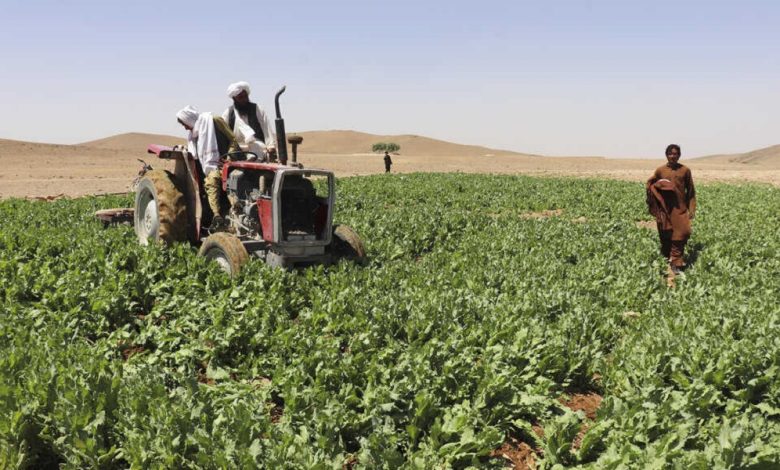
The Taliban’s Ministry of Interior has dismissed the United Nations Office on Drugs and Crime (UNODC) report alleging a more than 300% surge in opium poppy cultivation in Afghanistan, questioning the UN agency’s data collection and assessment methods.
The ministry claimed that, based on its evaluations, opium poppy cultivation in Afghanistan has almost reached zero, with over 23,000 hectares of land cleared of drug crops during 2026. According to the ministry, the UN statistics do not reflect the true state of the drug control efforts.
In contrast, the UNODC report titled “Afghanistan Opium Survey 2026” stated that opium poppy cultivation expanded from about 10,000 hectares in 2025 to over 43,000 hectares this year. The agency also estimated a roughly 400% increase in opium production, rising from nearly 300 metric tons to around 1,500 metric tons.
The report highlighted a shift of the main opium cultivation center to northeastern Afghanistan, where approximately 76% of the cultivation areas are located. The UN identified Badakhshan and Takhar provinces as major opium-growing regions and noted that cultivation was recorded in 16 provinces, five more than in 2025.
The UN agency attributed the resurgence in opium cultivation to farmers’ economic hardships and limited alternative income opportunities. It stressed that without sustainable support for farmers and the provision of alternative livelihoods, long-term reduction in opium cultivation would be challenging.
The report also mentioned that the average price per kilogram of dry opium decreased from about $570 in 2025 to $500 this year but remained significantly higher than the pre-ban levels. The UN emphasized that despite the rise in cultivation and production, both remain far below the pre-ban period when over 200,000 hectares in Afghanistan were dedicated to opium poppy farming.