Taliban-Pakistan dispute ends Moscow Format meeting without joint statement
The eighth meeting of the Moscow Format on Afghanistan ended without adopting a final statement due to differences between the Taliban administration and Pakistan, a development Russian officials described as “unpleasant.”
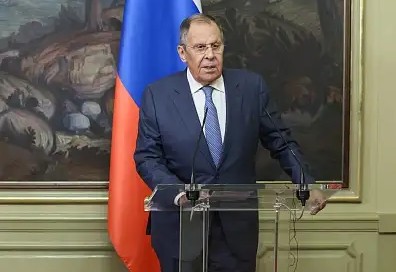
Speaking at a joint news conference in Moscow on Tuesday, October 14, with the foreign minister of the Democratic Republic of Timor-Leste, Russian Foreign Minister Sergei Lavrov said that although no final statement was issued, “there is no need to make a tragedy out of this,” as the roots of the dispute had been foreseeable.
According to Lavrov, there is currently serious tension between the Taliban administration and Pakistan, and one of the main factors is the presence of the Islamic State (ISIS) group and its affiliated branches, which he said carry out “terrorist attacks on the territory of Afghanistan and Pakistan.”
The Russian foreign minister also claimed that the most important lesson from the situation is the need to stop interference by non-regional countries in this geopolitical space. He linked the emergence of ISIS to the US invasion of Iraq and said that after NATO’s intervention in Libya, new terrorist groups also emerged.
Lavrov expressed confidence that both the Taliban administration and Pakistan are interested in normalising relations and that Moscow supports this process.
Earlier, Zamir Kabulov, the Russian president’s special representative for Afghanistan, announced that the eighth Moscow Format meeting ended without a joint statement because of disagreements between the Taliban administration and Pakistan, and that Moscow regretted the outcome.
Kabulov said the dispute escalated when the Taliban delegation objected to including items related to “terrorism” in the draft statement, arguing that Afghanistan was mentioned “too much in the context of terrorism.” He added that this position was unexpected for Moscow, because, in his words, similar phrases had also appeared in the final statement of last year’s meeting, but the Taliban delegation claimed that with the change in bilateral relations, including such a section was no longer acceptable to them.
However, Russian officials stressed that failure to agree on a joint statement would not halt the work of the Moscow Format, and that the mechanism would continue as a platform for coordinating regional cooperation.
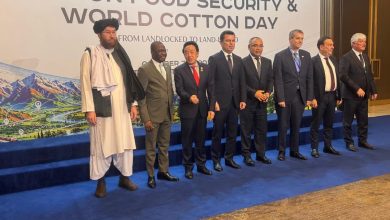
Representatives and officials from Russia, Pakistan, Iran, India, China, Kazakhstan, Kyrgyzstan, Tajikistan and Uzbekistan attended the eighth Moscow Format meeting, while Belarus and Egypt participated as guests.