Islamabad meeting ties engagement with Taliban to human rights
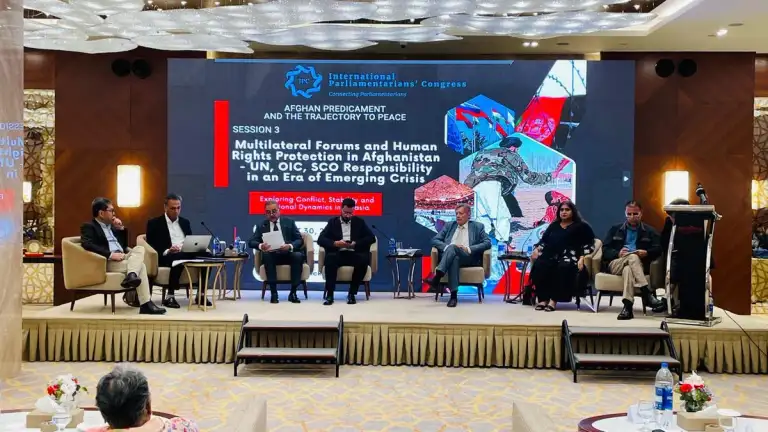
The international conference “Afghanistan’s Crisis and the Path to Peace” in Islamabad concluded with a statement in which participants described the Taliban administration as lacking legitimacy, capacity and inclusiveness, and said Afghanistan faces a crisis caused by the absence of an inclusive government and the presence of terrorist groups.
Maria Sultan, head of the South Asian Strategic Stability Institute, read out the closing statement. It said that the concentration of decision-making in Kabul and Kandahar, and the exclusion of a large part of society, increases the risk of structural instability, and that the Taliban administration’s internal cohesion does not mean national cohesion.
Participants described the deprivation of women from education and work as “strategic suicide” and warned about the increase in religious schools at the expense of public schools. They also expressed concern over the presence of more than 20 armed groups in Afghanistan and called for the creation of a joint monitoring mechanism involving the United Nations, the Organisation of Islamic Cooperation and the Shanghai Cooperation Organisation.
The closing statement also criticised the international community and said engagement with the Taliban administration without clear criteria would be ineffective. Participants said future engagement must be conditioned on respect for human rights, women’s education and the creation of an inclusive administration.
The holding of the conference has faced criticism from some Afghan users and media activists. Critics identified a number of the political figures present as officials of the previous administration and accused them of inefficiency and corruption during their time in office; these claims were presented in the report as the views of critics.
Meanwhile, some analysts, pointing to the presence of figures such as Mohammad Tahir Zuhair, said Hazaras’ political discourse should be pursued with awareness of regional developments and more precise calculations. Some critics also questioned Pakistan’s claims about peace and human rights at the same time as its border attacks and its record of support for armed groups, and expressed doubt about the role of Pakistan’s intelligence apparatus in bringing together opponents of the Taliban administration.