Afghan Media Criticise Ongoing Restrictions on Access to Information
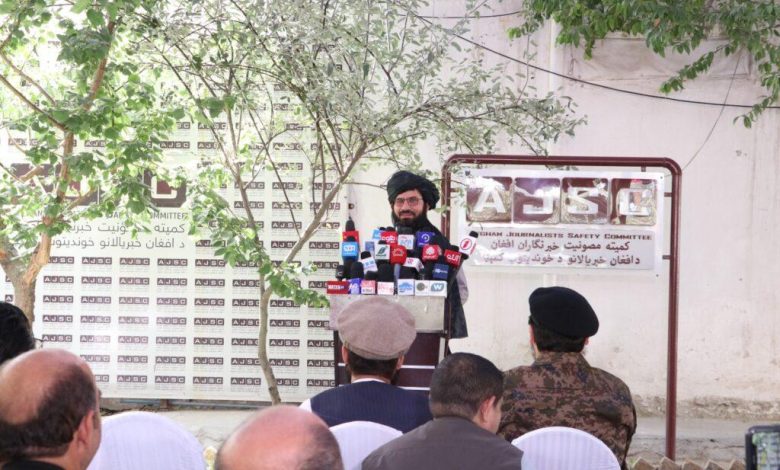
Media officials and journalist support organisations in Kabul say continued restrictions on access to information, delays in responses from government offices, and increased pressure on women journalists have made reporting more difficult and fuelled the spread of rumours.
The criticism was voiced on Saturday at an event marking the International Day for Universal Access to Information, organised by the Afghanistan Journalists Safety Committee with the حضور of Taliban administration officials, media managers and journalists. Participants said the failure to provide accurate, complete and timely information is one of the most serious challenges facing media work today.
Jamil Waqar, head of the Afghanistan Journalists Safety Committee, said the organisation had held programmes on the right of access to information in 24 provinces and had compiled journalists’ problems and proposals as a result. According to him, non-response or delays by spokespersons, a lack of press conferences, difficulty reaching officials, restrictions on photography, and greater limitations on women journalists were among the main issues raised.
He added that in some provinces, journalists are not even allowed to take mobile phones into government offices. Waqar called for a clear mechanism to improve journalists’ access to information, capacity-building programmes for government spokespersons, and easier access to information for women journalists.
Abdul Qadir Manasif, acting head and editor-in-chief of Pajhwok News Agency, also said that despite some improvements compared with the past, a number of offices still do not share information with the media in a timely manner, even on routine matters. He added that the problem is more severe in some provinces, and in the absence of official information, the gap is filled with speculation and unverified reports.
Hujatullah Mujaddidi, head of the Afghanistan Free Journalists Union, described access to information as the foundation of professional media work and warned that delays in this process could lead to more rumours. According to him, details and images of official trips or important plans are sometimes published from outside sources before domestic media receive official information, forcing local outlets to use that material.
Mujib-ur-Rahman Bahir, head of Ariana News Television, also cited delays in official responses, the provision of incomplete information, and restrictions on women’s attendance at some official meetings and events as current problems. He said that if accurate and timely information is not provided to the media, the ground is laid for misleading the public and spreading rumours.
In response, Taliban administration officials said they are trying to resolve these problems. Mawlawi Hedayatullah Mohajer Farahi, deputy minister for publications at the Taliban administration’s Ministry of Information and Culture, said journalists face problems in accessing information and that relevant institutions should provide the information they need.
Mawlawi Naim-ul-Haq Haqqani, head of the Taliban administration’s Information and Media Centre, also said the relevant institutions take the issue seriously and will cooperate with the media. Abdul Haq Hamad, adviser on publications to the Taliban administration’s Ministry of Information and Culture, also claimed that progress has been made on access to information and that the process is better than in the early years. He said the points raised by the Afghanistan Journalists Safety Committee have been recorded and action will be taken to address them.
The International Day for Universal Access to Information is observed every year on 28 September. The day was designated by UNESCO in 2015 and recognised by the UN General Assembly in 2019, highlighting citizens’ and media’s right to access information and the accountability of public institutions.