Taliban strategy: Pressure from outside and erosion from within
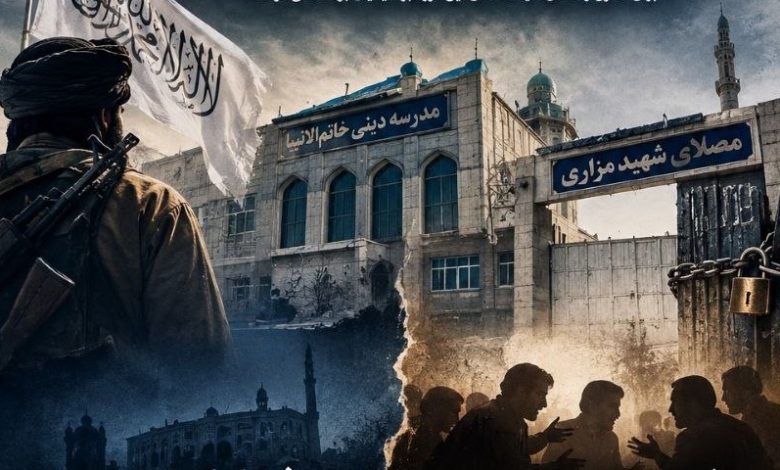
The Taliban’s drive to suppress Shiites has accelerated at a startling pace in recent weeks.
After the evacuation and closure of the Khatam al-Nabiyyin complex and the shutdown of its university, and after the confiscation of the home of Haji Mohammad Mohaqiq and the closure of the two television networks Tamadon and Rah-e Farda, Taliban forces yesterday also evacuated the Khatam al-Anbiya seminary in western Kabul and sealed the large prayer hall of Shahid Mazari. At the same time, they abolished the Supreme Commission of Shiites, a body created by the Taliban themselves to control Shiites and impose the group’s policies on them.
When a seminary, hawza, university, prayer hall, media outlet and other Shiite institutions are targeted one after another, it is clear that the aim is to weaken the identity and social foundations of this segment of society.
The Taliban are advancing pressure on Shiites through two paths at the same time: pressure from outside and erosion from within.
Externally, Shiite institutions are being shut down, evacuated and restricted. Internally, figures affiliated with or aligned with the Taliban are highlighting disputes and conflicts within the Shiite community so that society, instead of focusing on the main threat, becomes absorbed in internal strife and settling scores at home.
By creating the Supreme Commission of Shiites, the Taliban tried to sideline other Shiite institutions and impose their plans on Shiites through this commission. Now that this group has outlived its usefulness, and with the arrest of commission members, they have brought another set of their own elements into the field to fan the flames of division and deprive the Shiite community of the opportunity to respond to Taliban actions.
It is completely clear that in a situation where the Taliban have placed a blade at the throat of all Shiites, stoking internal divisions is a strategic mistake and in practice serves the Taliban’s interests. For the Taliban, Hazara, Sayyid, Qizilbash and Shiite Tajiks are all the same, and they are not friends with any of them.
On the other hand, no person of conscience can denounce the Taliban as oppressors and enemies and then do the very thing that ends up serving the Taliban’s interests.
Anyone who is fuelling issues such as conflict between Sayyids and Hazaras and Qizilbash in these days is moving exactly along the path that was previously handled by the Supreme Commission of Shiites.
The more division there is within the Shiite community, the lower the cost of Taliban pressure on the community will be.
Our main problem at present is not a dispute over something we all know is a creation of the enemy; it is the gradual pushing back of a community from educational, religious, cultural and social arenas, and the destruction of its identity symbols.
If the seminary and prayer hall are taken today and the Shiite community remains caught up in “insider against insider” infighting, nothing will be left for tomorrow.
The Taliban may be able to seize bricks, mortar and land; but all of these can be reclaimed, unless it succeeds in dividing the Shiite community from within.
Isn’t it time we woke up?
Sayyid Ahmad Mousavi Muballigh