Taliban abolishes Afghanistan’s High Shiite Commission
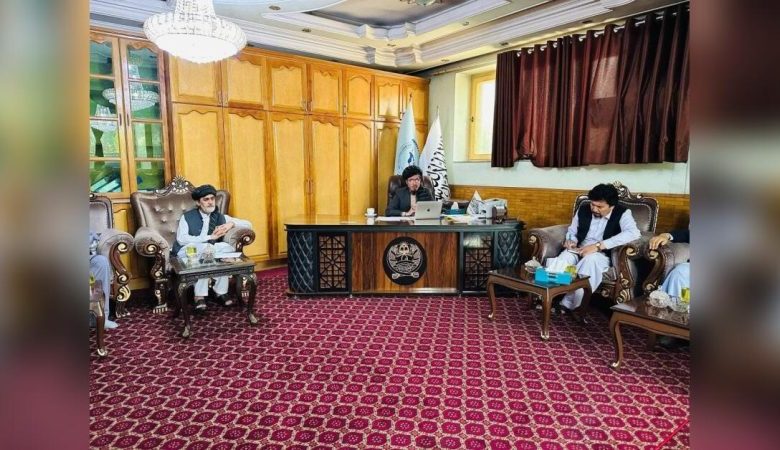
Sources in Kabul say the Taliban’s Ministry of Justice has dissolved Afghanistan’s High Shiite Commission and barred 25 members of the body from continuing their activities within its framework. According to the sources, the members’ identification cards were confiscated and they were told not to return to the commission’s office.
According to Shafaqna Afghanistan, the Taliban contacted the 25 commission members a day before the move and asked them to report to the Ministry of Justice. Sources said they were told that the commission’s head, Mohammad Ali Akhlaqi, was due to be released, but after they arrived at the ministry, their membership cards were taken from them and they were banned from further activity.
Another source has also confirmed the dissolution of Afghanistan’s High Shiite Commission. The source said Mohammad Ali Akhlaqi remains in custody and is being held at a location inside the Taliban’s Ministry of Justice that is attributed to Abdul Hakim Sharaei, the Taliban’s acting justice minister.
According to one source, the Taliban has asked Akhlaqi to vacate his private house in Omid Sabz Township in exchange for his release and hand it over to the administration. Sources also say the Taliban has declared Omid Sabz Township to be “emirate property.”
At the same time, unverified claims have emerged that six senior members of Afghanistan’s High Shiite Commission, including four former parliamentarians, are wanted by the Taliban. According to sources, these individuals also own homes in Omid Sabz Township.
The commission’s head and members were detained about a week ago when they went to the Taliban’s Ministry of Justice to mediate the release of several Shiite notables. Sources had earlier said Abdul Hakim Sharaei described the commission as a “political-intelligence” body and claimed such bodies are not allowed to operate under Taliban rule.
It is said that Afghanistan’s High Shiite Commission had previously been established with financial support and coordination from the Taliban’s intelligence agency. Omid Sabz Township is also one of Kabul’s residential areas, which in past years has been home to a number of political figures and Shiite residents.