UN Says Restrictions on Afghan Women Have Created Severe Crisis
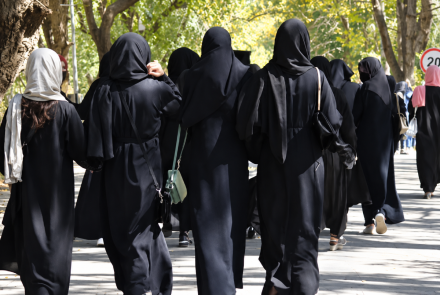
The United Nations says the continued restrictions on education, employment and women’s and girls’ participation in public life have pushed Afghanistan into one of the world’s most severe crises in women’s rights, with the measures in recent years depriving a large number of Afghan women of schooling and work.
Sarah Hendricks, head of policy and programmes at UN Women, said Afghanistan, in her view, is experiencing one of the most severe crises for women, especially girls, anywhere in the world. She stressed that women’s presence and participation in public life, as well as their role in political power, could change the course of women’s and girls’ lives.
According to her, the United Nations continues to support Afghan women and emphasizes that their rights and participation must not be ignored. Hendricks added that women’s rights are “not removable or negotiable.”
At the same time, a women’s rights activist warned that the continuation of these restrictions would not only affect the lives of women and girls, but would also have negative consequences for the country’s human capital and development process.
Meanwhile, Saif-ul-Islam Khyber, spokesman for the Taliban’s Ministry for the Propagation of Virtue and the Prevention of Vice, claimed that reports of violations of women’s rights in Afghanistan are baseless. He said that women’s and girls’ rights are secured within the framework of Sharia and that, according to him, women now enjoy rights that are “unprecedented” in Afghanistan’s history.
These remarks come as five years have now passed since girls above the sixth grade were barred from education, nearly four years since women were banned from university, and more than three years since women’s work was restricted in some institutions. UNICEF has also said that since 2021, more than 2.6 million girls have been denied secondary education.
The Ministry for the Propagation of Virtue and the Prevention of Vice is one of the Taliban administration’s key bodies in enforcing social restrictions, and in recent years the ministry has repeatedly been linked to the implementation of restrictions on women and civil liberties.