Taliban Restrictions Cost Afghanistan $84 Million a Year, Bloomberg Says
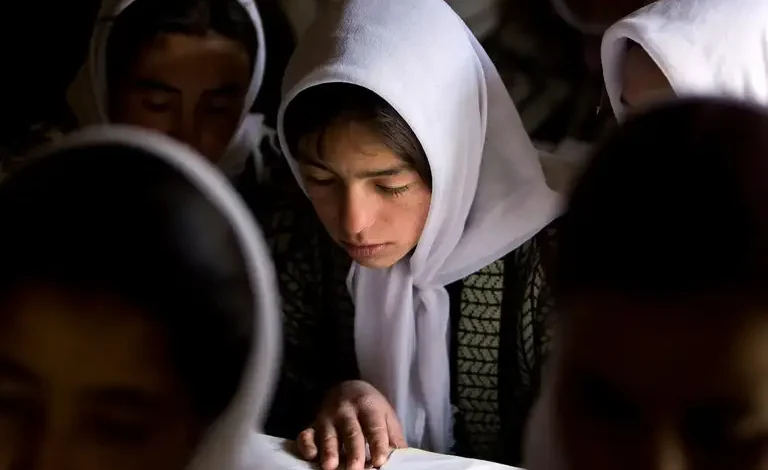
Bloomberg, citing a United Nations report, says Taliban restrictions on women’s education and employment cost Afghanistan’s economy at least $84 million a year, equivalent to 0.5% of the country’s gross domestic product. The report says these policies have also deprived millions of girls of their right to education.
The report says about 3.8 million girls in Afghanistan are currently out of school. It adds that the continuation of these restrictions has not only limited women’s educational and job opportunities, but has also directly cast a shadow over the country’s economic situation.
In an article, Bloomberg reporter Altaf Najafizada, referring to a recent interview with former Afghan President Hamid Karzai, wrote that Taliban restrictions on women’s and girls’ education and employment have also affected the administration’s international legitimacy. Karzai said the Taliban administration will face difficulties in gaining international recognition unless it lifts these restrictions.
He also described the return of girls to school and women to workplaces as essential conditions for the Taliban administration to be recognised. According to Karzai, barring women and girls from education and work is one of the main obstacles to normalising the administration’s relations with the world.
Earlier, UNESCO also warned that the continuation of the ban on secondary and higher education for women in Afghanistan could prevent around 600,000 women from entering the labour market by 2066 and wipe out $9.6 billion in economic income for the country. The UN educational body said women’s education is an important factor in economic growth and social development.
Bloomberg also pointed to the security implications of the situation, warning that continued educational deprivation could create fertile ground for extremism and further instability in Afghanistan and the region. According to the outlet, for some girls who have been denied secondary school education, religious schools have become one of the few remaining options for continuing their studies.
The report also says that efforts by the international community, including the Oslo talks in 2022 and the Doha meeting in 2023, have so far failed to push the Taliban to retreat from its restrictive policies. Some countries have tied normalising relations with the Taliban to guarantees of women’s basic rights, including education, employment and participation in public life.
Despite this, only Russia has recognised the Taliban administration in nearly the past five years. At the same time, countries such as Iran, China and India have resumed their trade and diplomatic relations with the administration.