National Resistance Front Condemns Taliban Attacks on Pakistan, Citing Regional Security Risks

Ali-Meysam Nazari, head of foreign relations for the National Resistance Front, condemned the recent Taliban administration’s attack on Pakistani territory, calling it contrary to the interests of the Afghan people and regional security. He emphasized that Afghanistan under Taliban rule is neither beneficial for the country’s inhabitants nor does it contribute to regional stability.
The Taliban’s Ministry of Defense announced on Friday, June 19, that in nighttime airstrikes, “centers affiliated with ISIS” were targeted in the Pakistani provinces of Balochistan and Khyber Pakhtunkhwa. The ministry issued a statement warning that Afghanistan would not allow any threat to its security to develop and would respond using all available means.
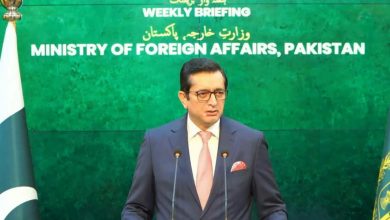
In response, Pakistan rejected the Taliban’s claims of carrying out drone attacks. The verification department of Pakistan’s Ministry of Information and Broadcasting declared that terrorist group camps, including those of ISIS, are located in Taliban-controlled areas and are managed from there.
Nazari wrote in a note on the social media platform X that the very existence of Afghanistan should be based on a neutral, stable, and constructive government; a country that serves as a center for trade, security, and welfare, providing conditions for regional and global peace. He warned that the current approach’s continuation poses a serious threat to Afghanistan’s future.
The head of foreign relations for the National Resistance Front also called on democratic opponents and regional stakeholders to engage in serious dialogue to reach a common consensus. He believes that escalating cross-border military tensions further isolate Afghanistan and that the country’s residents ultimately bear the cost.
Meanwhile, Samia Sadat, former commander of Afghanistan’s special forces, described the attacks as a “reckless escalation” of tensions and condemned them. The rise in such tensions comes as Afghanistan faces significant internal security and political challenges.