Israel Establishes 40 New Military Bases in Gaza Amid Escalating Control
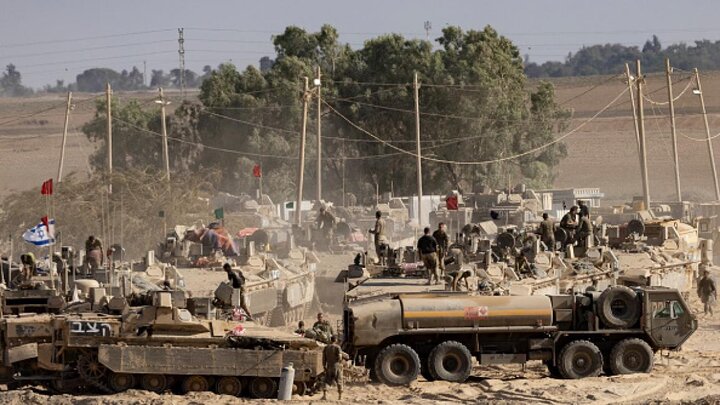
An Israeli military analyst has announced that the Israeli army has established 40 new military bases across various parts of the Gaza Strip, surrounding them with protective systems, trenches, and early warning zones. According to the analyst, these bases have been constructed in areas currently under Israeli military control.
Ran Ben-Yishai, an Israeli military expert who recently visited Gaza with the support of the Israeli military, stated that these bases are designed to station joint armored, infantry, and engineering units. He noted that most of these facilities, especially in northern Gaza, have been completed, while others are still under construction. Ben-Yishai estimated the construction cost of each base to exceed one million dollars.
The analyst emphasized that the areas controlled by the Israeli army now encompass about 64 percent of the Gaza Strip’s territory, and these areas have been largely depopulated. He added that approximately 400,000 Palestinians are living in tents or makeshift shelters made from plastic sheets and metal panels, mostly within partially destroyed buildings—a situation he described as a “time bomb” and a long-term threat.
Ben-Yishai mentioned that one of the bases he visited has been built over the ruins of the Bani Suheila village east of Khan Younis. According to him, these bases have been established several hundred meters beyond what is called the “yellow line” to prevent direct infiltration or potential attacks through tunnels and to reduce the risk of direct fire.
He also revealed that between the bases and the aforementioned line, a zone hundreds of meters wide is being developed as a warning and protection area, along which trenches are being dug to prevent rapid vehicle assaults. Excavation and tunnel detection operations continue.
Meanwhile, under issued directives, any Palestinian crossing designated roads “must be stopped or killed,” a policy that has raised serious human rights concerns. The ongoing expansion of military installations and forced evacuation of residential areas, alongside the dire conditions of civilians, have prompted serious questions about the humanitarian consequences of this military approach.