Forgotten Contribution: Afghan Scholars’ Role in Shaping Shia Islam Over Two Centuries
Religious seminaries in Najaf, Qom, and Mashhad over the past two centuries, especially in recent decades, have not been merely centers for the education of Afghan seminarians. Many scholars from Afghanistan have become influential professors, authors, researchers, and maraji (religious authorities) shaping Shia Islam globally.
The influential Afghan figures contributing to the growth of Shia Islam in the Islamic world can be broadly categorized into three groups.
The first group includes those who, despite gaining recognition and reputation in the seminaries of Najaf and Qom, realized that their presence was more crucial among Shias in Afghanistan. After returning home, they upheld the banner of preserving and promoting the teachings of the Ahl al-Bayt (the family of the Prophet) in a region considered among the most deprived areas of the Islamic world.
Among them were the late Ayatollah Sayyid Hassan Rais Yekawlang (who was regarded by many scholars as equal in stature to the late Ayatollah Khoei as long as he was in Najaf), the late Ayatollah Vahidi Jaghoori, the late Ayatollah Khosravi, the late Mr. Bahr, the late Sheikh Sultan, and many others whose names are too numerous to list here. These scholars not only promoted the teachings of Ahl al-Bayt in Afghanistan but also laid the foundations for training outstanding students who later went on to establish Afghanistan as a center for producing knowledge in Ahl al-Bayt studies within religious and jurisprudential arenas.
The second group comprises those who significantly enriched Shia Islamic sciences by training distinguished students in Qom and Najaf—the main centers of Shia jurisprudence and studies. The late Ayatollah Modarres Afghani, Ayatollah Salehi Modarres, among others, have taught or influenced numerous scholars and jurists from various countries, either directly or indirectly, through their scientific legacy.
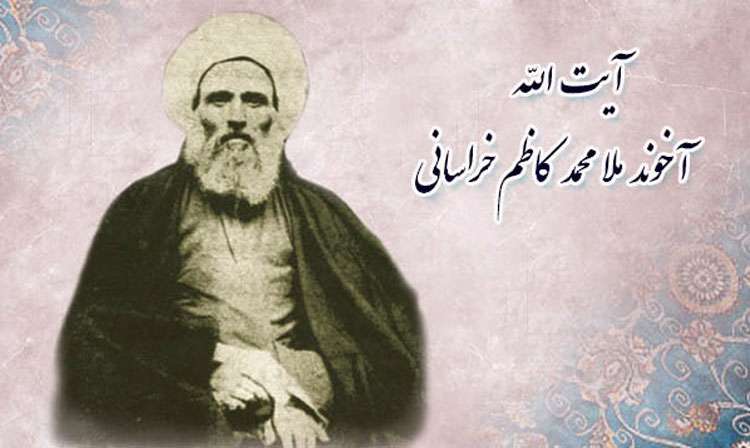
The third group consists of scholars who have made substantial contributions to intellectual production and authorship. Beyond the late Akhund Khorasani, author of “Kifayat al-Usul,” which has been the principal text of usul (principles of Islamic jurisprudence) in Shia seminaries worldwide for more than a century, there are jurists such as the late Ayatollah Fayaz, author of “Lectures in the Science of Usul,” “Minhaj al-Salihin,” “Al-Mabahith al-Usuliyyah,” and “Misbah al-Minhaj,” the martyr Ayatollah Sayyid Sarwar Waez, author of “Misbah al-Usul,” the late Ayatollah Muhammad Asif Mohseni, author of works like “Ma‘jam al-Ahadith al-Mu‘tabarah,” “Research in the Science of Rijal,” and “Mashra‘a Bihar al-Anwar,” and also the late Ayatollah Mohaghegh Kabuli, author of “Minhaj al-Salihin,” “Al-Mabahith al-Fiqhiyyah,” and “Wazifeh al-Qudat.” These prominent Afghan figures have shaped part of the contemporary scholarly memory of Shia seminaries. Their jurisprudential, principles, hadith, historical, and theological works, combined with years of teaching and training students, represent a valuable legacy for the Shia scholarly community.
This scholarly contribution by Afghan jurists continues today. The extensive presence of Afghan researchers in academic and research centers associated with the seminaries, including institutions linked to the Islamic Propagation Office in Mashhad and Qom as well as research centers in Najaf, indicates that Afghanistan’s role in producing religious knowledge is not confined to the past but remains ongoing.
Afghan researchers have played a prominent and undeniable role in shaping and completing works such as the “Thematic Dictionary of Qur’anic Exegesis,” “Thematic Dictionary of Nahj al-Balagha,” and “Tafsir Rahnama.” Furthermore, the volume of published articles and scientific research that have advanced scholarship and made a significant contribution to knowledge production runs into thousands of books and papers. This output is considered far beyond what might be expected when compared to the population and resources available to Afghan students.
Therefore, the history of Shia Islam in Afghanistan should not be seen merely as a history of receiving the teachings of the Ahl al-Bayt but as a history of active participation in the dissemination and production of these teachings. The human capital from this land has borne a significant part of the scholarly burden of Shia seminaries over many decades and has played an enduring role in forming the contemporary jurisprudential, hadith, and intellectual heritage of the Shia world.
In conclusion: Experience shows that whenever the Afghan Shia community has relied on its scholarly resources and entrusted leadership to pious scholars—not opportunistic, poorly educated politicians—it has managed to exert influence far beyond geographic and political limitations, even if some have tried to overlook Afghanistan’s contributions to the strengthening of Shia Islam worldwide.
By Sayyid Ahmad Mousavi, Preacher