Former Commander Criticizes Taliban’s Monopoly on Power and Ethnic Favoritism
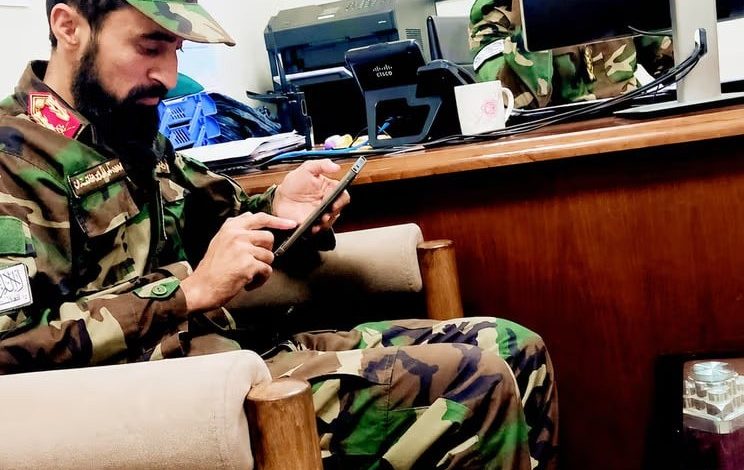
Salahuddin Salar, a Tajik commander and former deputy intelligence chief at the Taliban’s Ministry of Defense, criticized what he called the “monopoly of power and ethnic favoritism” within the Taliban administration. He stated that they pledged allegiance to the leader without seeing him, emphasizing that the purpose of the war was not to establish the rule of a specific ethnic group.
On Sunday, Salar shared a video of a speech by Abdul Qadeer Saad, a Taliban critic from Balkh province, writing that the war was fought to “end occupation” and establish an “Islamic government,” not for the ethnicity and fellow tribesmen of current leaders to seize power. In the video, Abdul Qadeer Saad also criticized the concentration of authority in the hands of Pashtun Taliban.
The former commander added that he had previously dismissed the predictions and warnings of opponents regarding the Taliban leaders’ behavior. However, he now believes that “all dissenting voices have proven true,” and the Taliban administration’s practical actions have confirmed these claims.
Two years ago, Salahuddin Salar was dismissed from his position after publicly opposing Qari Ayub Khalid, then governor of Badakhshan. He had repeatedly criticized “corruption,” “ethnic discrimination,” “prioritizing personal and tribal interests over justice,” and the concentration of national wealth and resources among a limited group of individuals.
According to him, the continuation of this situation widens the gap between the people and the Taliban administration and undermines the legitimacy of power—a matter that has become more sensitive in Afghanistan’s current state, given the absence of electoral mechanisms and inclusive political participation.
In response to the assassination of Akramuddin Sarir, former police chief of Takhar province, he also emphasized that killing and assassination are not solutions to Afghanistan’s crises, and that violence only broadens the scope of mistrust.