UNDP Supports Afghan Farmer to Harvest Over One Ton of Melons Through Greenhouse Project
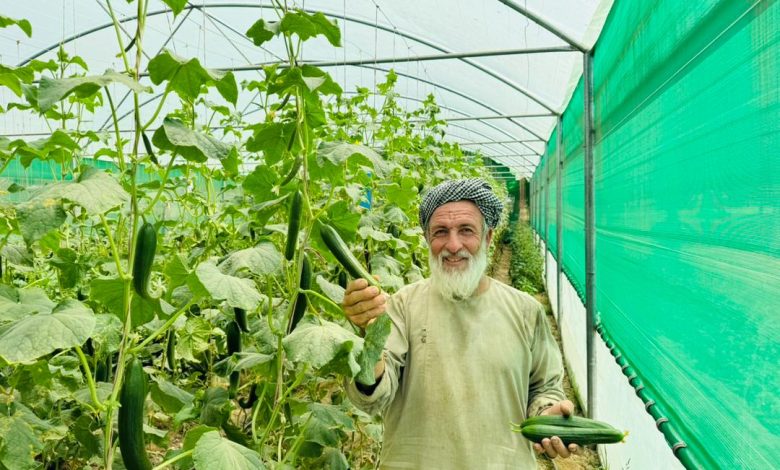
The United Nations Development Programme (UNDP) in Afghanistan has announced its support for a farmer to establish a greenhouse farm under the ‘Afghan Community Resilience’ program, resulting in a harvest of more than one ton of melons.
On Tuesday, 30 June, UNDP wrote on its X (formerly Twitter) page that Hamidullah, an Afghan farmer, was able to build a standard greenhouse with their assistance, enabling him to generate a sustainable income for his family.
According to UNDP, this project was implemented with the support of the European Union delegation in Afghanistan. The program aims to strengthen local capacities and help families achieve sustainable sources of income.
Afghanistan’s agricultural sector has suffered significant damage in recent years due to consecutive droughts, prolonged conflicts, and continued use of traditional farming and harvesting methods. Under such circumstances, experts emphasize that expanding greenhouses and adopting modern agricultural techniques could help alleviate challenges related to lower production and unemployment in rural areas.
However, farmers in many provinces still face a lack of technical support, limited market access, and an absence of coherent agricultural programs. This situation calls for greater attention from responsible entities, including the Taliban administration, to improve the livelihoods of rural residents.