Trump’s Approval Rating Drops to 33% Amid Rising Gas Prices Impacting White House
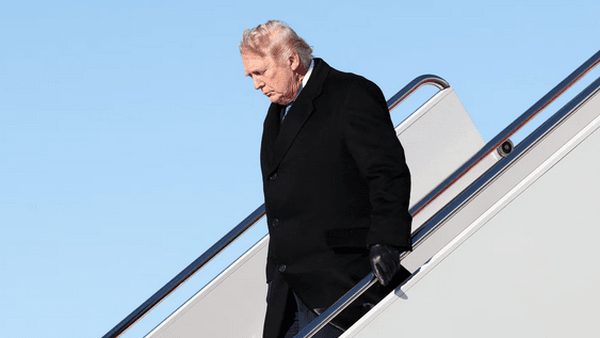
Several recent polls in the United States indicate that the approval rating of Donald Trump, the U.S. president, has declined following the increase in oil and fuel prices, reaching in some cases the lowest recorded levels. According to published data, satisfaction with his performance ranges between 33% and 43%.
Two separate polls released last week by the Associated Press-NORC Center for Public Affairs Research and Quinnipiac University showed the president’s approval rating at 38%. Meanwhile, a poll by the University of Massachusetts recorded a 33% approval rate, considered the lowest rating Trump has received to date.
In contrast, a Fox News poll published on Wednesday showed that 41% of respondents support his handling of issues. Additionally, a Harvard-backed poll last week reported his approval rating at 43%.
Nate Silver, a prominent polling analyst, identified the increase in fuel prices following the war against Iran as an “important factor” in the decline of the president’s popularity. He wrote on X (formerly Twitter) that “signs of erosion among Trump’s voter base” are visible, with only 22% of Americans holding a “strongly positive” view of him. According to Silver, some candidates for the 2028 election are also distancing themselves from Trump.
Following recent military developments, oil tanker traffic through the Strait of Hormuz — one of the main global oil trade routes — has effectively stopped. This situation has caused the price of Brent crude oil, the international benchmark, to rise, reaching about $118 per barrel on Tuesday morning; before U.S. and Israeli attacks on Iran, the price was approximately $70 per barrel.
At the same time, gasoline prices in the United States have also increased. According to a report by the AAA, the national average price for regular gasoline reached $4 per gallon on Tuesday morning, showing an increase of more than one dollar compared to one month earlier.
Trump had emphasized controlling living costs and reducing economic pressure on citizens during his 2024 presidential campaign. However, the economic consequences resulting from military actions against Iran and rising inflation have now become one of his serious challenges in recent polls.