Extensive Gold Mining Alters Course of Panj River, Raising Environmental Concerns in Afghanistan
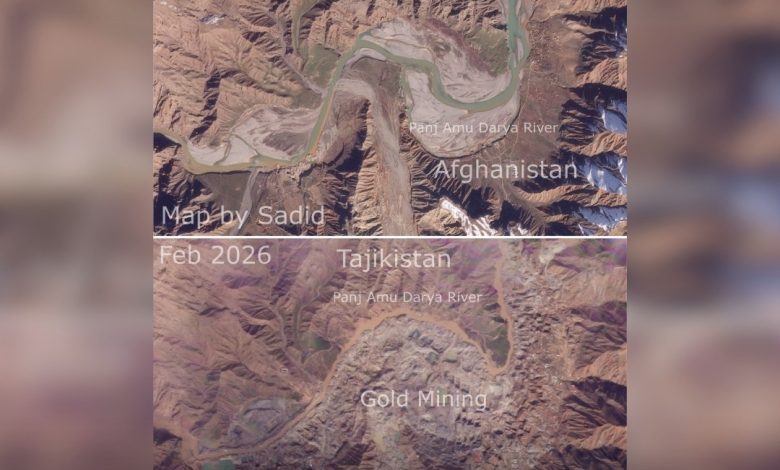
Najibullah Sadid, a water resources researcher, has announced that extensive gold mining from the bed of the Panj River has caused the river’s course to shift toward Tajikistan in some areas. He warned that Afghanistan is paying a heavy price for this process, which has severely impacted the environment and water resources.
On his X (formerly Twitter) page, Sadid published satellite images comparing the state of the Panj River before and after gold mining began. According to him, these images show that the natural water flow has been altered in certain sections and that surrounding areas have been affected by mining activities.
Previously, residents of Takhar and Badakhshan provinces in northeastern Afghanistan have repeatedly warned about the environmental consequences of gold mining. They have stated that continuing this activity could seriously threaten agricultural lands, drinking water supplies, and the region’s ecosystem.
Despite these concerns, the Taliban administration has consistently claimed that gold mining in these areas does not harm the environment or water resources. However, experts emphasize that the lack of transparency, independent environmental assessments, and regulatory mechanisms has heightened worries about the management of the country’s natural resources.
The Panj River is one of the most important rivers in northeastern Afghanistan, flowing through Badakhshan province and forming part of the natural border between Afghanistan and Tajikistan. It is also one of the main sources of the Amu Darya River, and any changes in its course or water quality could have regional consequences.