Residents of Badakhshan Complain of Frequent Power Outages Despite Abundant Water Resources
Residents of Badakhshan province say that despite its extensive water resources, the region faces frequent power outages, and most districts still lack stable access to electricity. According to them, in some areas, electricity is supplied only once every three days and only for about eight hours.
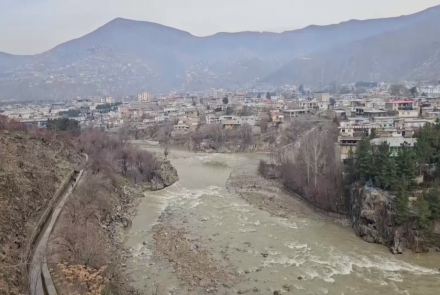
The residents emphasize that Badakhshan has significant natural resources, especially water, but these capacities have not yet been effectively managed and utilized. The Kokcha River originates from the mountains of Kuran wa Manjan district, passes through Faizabad city, and flows into the Amu River in Khwaja Ghar district of Takhar province. However, much of Badakhshan’s agricultural land remains fallow, and the lack of electricity remains a serious challenge.
Energy experts believe that Badakhshan has the capacity to produce about 23,000 megawatts of electricity, while only 150 megawatts are considered sufficient to meet the current needs of the province. Faridun Faiz, one of the experts, says that 53 percent of Afghanistan’s water resources are located in Badakhshan, with billions of cubic meters of water flowing annually from the Amu, Kokcha, and other small rivers in the province.
Meanwhile, the Badakhshan Electricity Directorate has announced that a proposal to build a 28-megawatt dam called “Pol Soch” in Jurm district has been submitted under the leadership of the Taliban administration. Hikmatullah Akhundzada, head of this directorate, said that if this plan is approved, Badakhshan will no longer need imported electricity in the future.
Despite this, so far only a few small hydropower dams in some districts and the 7-megawatt Shorabak dam in Faizabad city are operational, which cannot meet the city’s electricity needs. Citizens say the Taliban administration must practically and transparently utilize Badakhshan’s natural capacities to free the province from its current dependency and deprivation.