Taliban Bans Valentine’s Day in Afghanistan, Warns Sellers Against Red Symbols
The Taliban administration has banned the celebration of Valentine’s Day in Afghanistan, coinciding with February 14, a day widely recognized as ‘Valentine’s’ or Lovers’ Day in many countries. Practical signs of this ban have been enforced in Kabul and Herat.
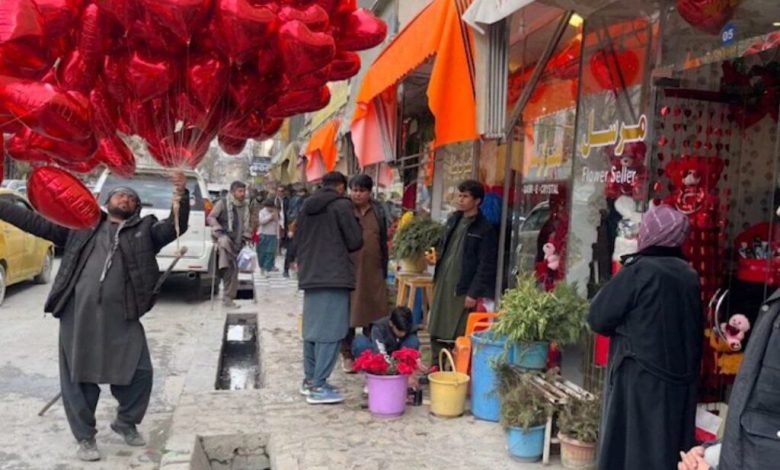
In the city of Herat, especially in Taraqee Park—a busy area hosting hundreds of restaurants and several flower shops—several flower shops have posted signs on their entrances stating “Valentine’s is forbidden.” Residents say this area traditionally witnessed extensive sales of flowers and gifts on February 14 in previous years, but this year the atmosphere is noticeably different.
In Kabul, Taliban morality police have been deployed near some restaurants and recreational centers, monitoring citizens’ movements and shop activities. Some shopkeepers have reported receiving warnings to refrain from decorating their shops with heart symbols, the color red, and selling items related to this day.
Taliban officials have previously described the celebration of Valentine’s as incompatible with the Islamic and cultural values of society and have prohibited the sale of symbols such as red roses, greeting cards, and special gifts for the occasion. However, so far, no statistics have been released regarding any enforcement actions or penalties related to this ban.
These restrictions are being imposed amid a significant increase in limitations on cultural and social activities since the Taliban’s return to power in 2021. Critics argue that the expansion of ideological oversight into citizens’ private lives is part of the Taliban’s broader policy to curtail civil freedoms.
Despite these pressures, some young people in certain major cities quietly marked February 14. In parts of the cities, rose flowers, balloons, and other symbols associated with the day were visible, and some couples exchanged gifts cautiously.
In previous years, the Taliban also condemned Valentine’s Day as promoting ‘immorality and corruption,’ emphasizing that the occasion has Christian origins and should not be celebrated in Islamic societies. This contrasts with the republican era when Valentine’s was widely popular among Afghanistan’s youth and had become a symbolic event in major cities.