Taliban’s Penal Code Reveals Systematic Return to Pre-Modern Repression
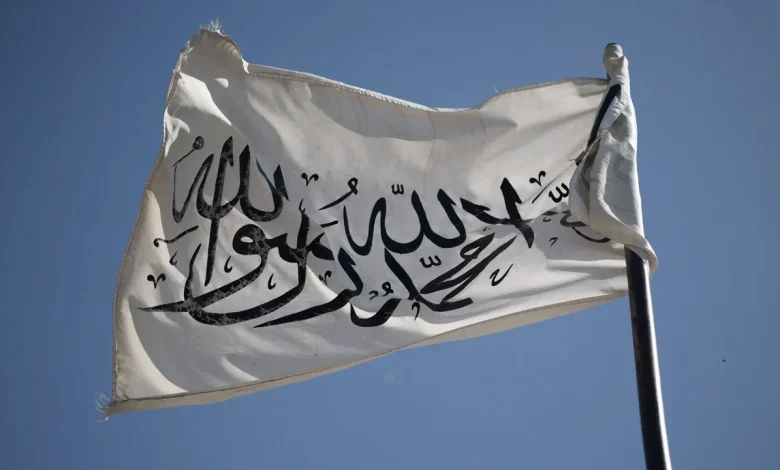
The publication of the Taliban’s Penal Code revealed that, contrary to the hopes of some optimists who expected the Taliban to transform from a militant group into a responsible government, they are systematizing oppression.
This 119-article document is essentially a manifesto signaling a return to the pre-modern era, translating slavery, caste systems, and religious inquisitions into law.
The most notable feature of this code is that the law, rather than controlling rulers, has become a tool for rulers to exercise one-sided control over the people. Society is divided into four distinct classes, with punishments for the same crimes varying by class.
The social and religious apartheid initiated through the division of society into four social strata—clerics, nobles, middle class, and lower class—has escalated into religious repression and the official revival of slavery.
The Taliban’s penal code imposes harsh criminal laws banning freedom of expression, belief, joy, and art, and authorizes the Taliban to interfere in individuals’ private lives. The inclusion of a series of horrific and inhumane guidelines represents a “civilizational reverse engineering” that has been carried out step by step.
Since assuming power in August 2021, the Taliban have never moved toward drafting a constitution for Afghanistan or making efforts to structure governance. However, as a first step in this reverse engineering, a book titled “Al-Imarah al-Islamiyyah wa al-Nizam” was written by Mawlawi Hakim Haqqani, the Taliban’s Chief Justice.
This book sought to establish the theory of absolute dominance of the Taliban leader over society. Haqqani emphasized the rejection of democracy, the separation of powers, and underscored the absolute rule of the ‘Amir.’ Article 1 of the penal code reflects this, making all Taliban laws subject to the approval and interpretation of the group’s “Commander of the Faithful,” who is also granted exclusive interpretive authority under Article 115.
Thus, it is not hard to see that the current penal code is the legal embodiment of Haqqani’s “authoritarian caliphate” theory.
The second book released by the Taliban, “Al-Mu’tamad al-Maturidi fi Mu’taqad al-Maturidi,” authored by Mawlawi Noor Ahmad Islamjar (Taliban governor of Herat), promotes religious dogmatism and rejects all opposing views, even within Sunni sects.
Islamjar draws sharp lines between “true believers” and “innovators,” a worldview directly reflected in Article 26 of the penal code criminalizing apostasy from the Hanafi school, and Article 27 prescribing ten years imprisonment for propagating religious innovation. The definition of innovator (including followers of other schools besides Hanafi) found in Article 2 also stems from this intellectual source. Islamjar’s theological views, expressed in his book, have become enforceable laws in the Taliban’s penal code.
If these two books are considered the Taliban’s theoretical manifesto, then the penal code is their operational manual and legal codification. While the books debated virtues and vices, the code determines “the number of lashes” and “years of imprisonment.”
However, the main issue to focus on now is that the Taliban’s lawmaking is not merely an internal matter—it aims to establish a Salafi-totalitarian governance model with implications that go beyond Afghanistan’s borders. The Taliban are transitioning from a “warring group” to a “legislating authority.” This process started with the works of Haqqani and Islamjar and culminated in this penal code, indicating a systematic intent for state-building through exclusion, without regard for national or international legitimacy.
The penal code converts extremism from a matter of “individual militant behavior” into a “legal duty of judges.” When oppression becomes codified in law, it is much harder to reverse than when it is a temporary military practice. This process contains no parliamentary input or public consultation; law is simply the “will of the ruler” imposed on the masses.
The critical and alarming aspect is that the Taliban’s success in creating a 119-article legal system based on the strictest religious interpretations could serve as a governance model for extremist groups worldwide, signaling that democratic systems can be replaced by a “codified religious dictatorship.” Provisions such as Article 26 (criminalizing apostasy) and Article 9 (caste system) effectively turn large segments of Afghanistan’s population—Shiites, reformists, civil society activists, and women—into “potential criminals.” This legal framework is driving a new wave of forced migration, as people flee not only poverty but a “legal apartheid.”
The implicit acceptance or silence of the international community and neighboring countries toward a law that explicitly mentions “slavery” (Article 15) and legalizes torture for confessions (Article 44) signals a global retreat from human rights achievements and human dignity protection. If the world and neighbors accept this text as the law of a UN member state or a neighboring country, it will represent a profound ethical collapse of global human rights standards.
Moreover, when Article 2 deems any belief opposing Sunni Islam an “innovation,” and other articles label it “corruption on earth,” it paves the way for physical elimination of dissent under the guise of law. This “legal radicalism” can justify cross-border violence against those the Taliban categorize as “innovators” or “agents of corruption.” Several such eliminations have already been witnessed in recent months.
In conclusion, the Taliban’s penal code is not simply a domestic document; it is a warning signal for modern civilization. It shows that extremism has moved from the battlefield to the legislative chambers. The world must not be deceived by the “lawful” appearance of this text; it is crafted not for justice but to bury freedom and human dignity under a harsh bureaucracy.
Seyed Ahmad Mousavi, Preacher