Taliban’s Minister Urges Separation of Humanitarian Aid from Politics Amid Harsh Winter for Returnees
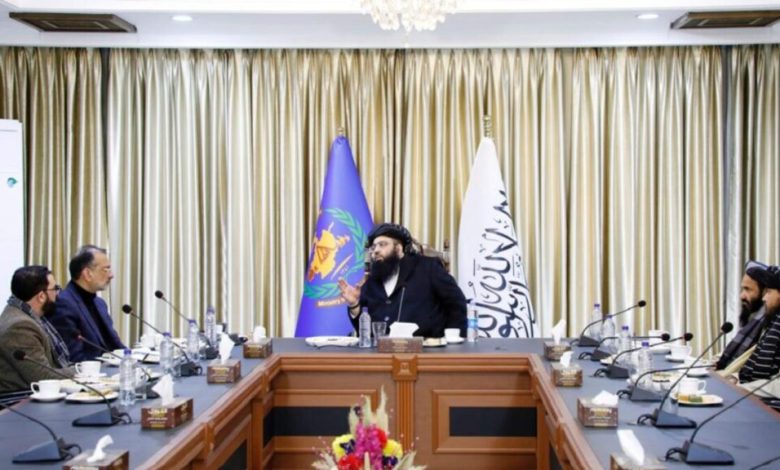
Abdulkabir, the Taliban administration’s Minister of Refugees and Repatriations, emphasized in a meeting with the UN High Commissioner for Refugees (UNHCR) representative in Afghanistan that the international community should not tie humanitarian aid to political issues, especially as returnee migrants from neighboring countries face the harsh winter season.
The Ministry of Refugees under the Taliban stated in a press release that these remarks were made during Abdulkabir’s meeting with Arafat Jamal, the UNHCR representative, focusing on the difficult situation of returnee migrants and the urgent need for continued aid.
This comes as several international organizations have previously warned that the forced return of migrants from Iran and Pakistan could deepen Afghanistan’s economic and humanitarian crisis—a crisis largely attributed to ineffective planning and restrictive policies under the Taliban administration.
Since the Taliban’s return to power, global aid to Afghanistan has significantly declined—a move the international community links to widespread restrictions on fundamental citizen rights, particularly those of women and girls, as well as ongoing security and political concerns. Critics argue that the primary victims of this situation are ordinary Afghan citizens.
Alexander Matheo, the regional head for Asia and Oceania of the International Federation of Red Cross and Red Crescent Societies, has warned that the cut in global aid will have “tragic and catastrophic consequences” for Afghanistan. In a video message, he explained that decreased assistance drives families toward child labor, early marriage of girls, and loss of young children due to hunger and cold.
According to Matheo, hunger and malnutrition have long existed in many Afghan villages, notably in the east, but people could previously access nutrition centers and primary health clinics during emergencies. Now, due to a sharp decline in financial aid, hundreds of service centers across the country are closing.
Simultaneously, the International Rescue Committee recently reported that Afghanistan ranks among the countries most affected by reduced global aid and inequalities in climate finance. The report highlights that countries such as Afghanistan and Yemen, despite facing severe war and climate crises, remain marginalized by international financial institutions.
The report notes that 17 countries, including Afghanistan, which constitute only 11 percent of the world’s population, account for 70 percent of global humanitarian and food crises. However, in 2022, they received only 12 percent of the global budget for climate change adaptation.