Afghanistan’s Ministry of Public Health Emphasizes Public Awareness on World Cancer Day
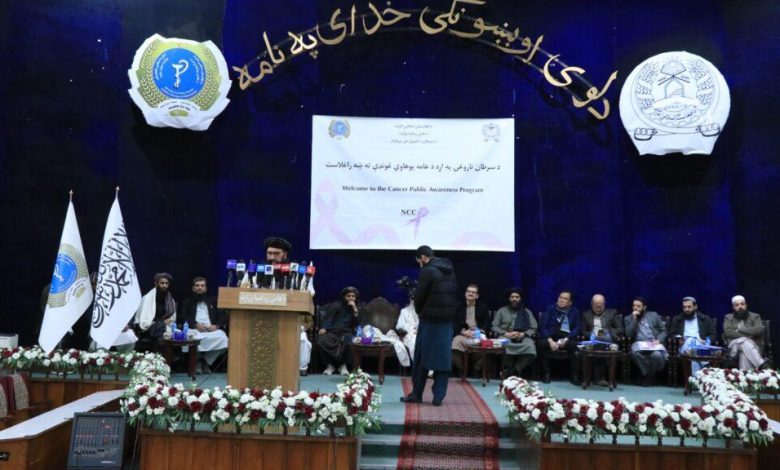
Coinciding with February 4, World Cancer Day, Afghanistan’s Ministry of Public Health announced that increasing public awareness and timely diagnosis are the most effective ways to reduce the consequences of this disease in the country. The ministry stressed that cancer is not only a health issue but also has broad social, economic, and humanitarian dimensions.
Maulvi Abdul Wali Haqqani, Deputy Minister of Health Services at the Ministry of Public Health, said at an awareness session in Kabul that cancer is among the dangerous non-communicable diseases worldwide that put heavy pressure on the psychology, economy, and social status of families. According to him, prevention through early diagnosis is the key to combating this disease.
Haqqani added that the Ministry of Public Health aims to establish a standard system for cancer diagnosis and treatment and described the opening of the National Cancer Diagnosis and Treatment Hospital with a capacity of 200 beds in Kabul as an important step in this direction. However, he emphasized that without institutionalizing a culture of prevention in society, these efforts will not yield the desired results.
According to information from the Ministry of Public Health, this hospital was officially opened for the first time in Afghanistan on the 9th of the current month of Dalw (January/February). The ministry’s officials state that expanding diagnostic and treatment services requires comprehensive community participation.
At the same session, Dr. Mohammad Dawood Miraki, head of public awareness at the National Cancer Control Program, said that millions of people worldwide are diagnosed with cancer annually, and a large number lose their lives. He cited factors such as smoking, physical inactivity, obesity, air pollution, and lack of timely diagnosis as major causes of cancer.
Meanwhile, Dr. Mohammad Hasan Ghiyasi, Deputy of Policy and Health Development at the Ministry of Public Health, emphasized expanding cooperation with international organizations, health institutions, and supporting entities, stating that such collaborations can increase people’s access to quality diagnostic and treatment services.
Also, the World Health Organization representative in Kabul stated that the organization is committed to increasing awareness, screening, access to chemotherapy drugs, and strengthening the capacity of health workers in oncology and palliative care; measures that can bolster hope for a future with a reduced cancer burden.