Trump Says Venezuela’s Share of Oil Revenues Still Unsettled Amid Continued Talks
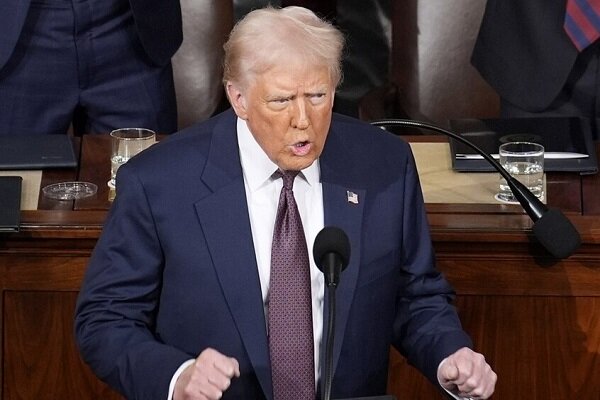
Donald Trump, the current president of the United States, stated that Caracas’s share of revenues from Venezuelan oil sales has not yet been finalized, and discussions on the matter are ongoing. Speaking to reporters, he emphasized that the U.S. intends to sell a significant amount of Venezuelan oil and that both parties will receive a portion of these revenues.
These remarks come as Nicolás Maduro, president of Venezuela, had earlier warned in a letter to members of the Organization of the Petroleum Exporting Countries (OPEC) that the ultimate goal of U.S. pressure and interference is to gain access to and control over the country’s oil resources. Trump’s recent comments have renewed these concerns and, according to critics, exemplify Washington’s interventionist approach toward countries with natural resources.
In another part of his statement, Trump claimed to have halted oil shipments to Cuba and said he asked the president of Mexico to stop oil exports to Cuba, a request that he said was agreed to by the Mexican side. Despite increasing economic pressures on the Cuban people, the U.S. president asserted that Washington is not seeking to cause a humanitarian crisis in Havana and described these actions as tools to compel Cuba to negotiate with the White House—an assertion met with widespread skepticism by observers.
Trump also announced the start of talks with European leaders regarding Greenland, stating that he views these negotiations as highly important for U.S. national security. He claimed that consensus has been reached on certain issues and that Europe is keen to reach an agreement.
Earlier, on January 21, after talks with NATO Secretary General Mark Rutte, Trump mentioned the formation of frameworks for an agreement on Greenland. According to media reports, the draft focuses on maintaining Denmark’s sovereignty over Greenland and updating the 1951 defense agreement. However, Mette Frederiksen, the Danish prime minister, rejected this process and emphasized that the NATO Secretary General was not authorized to negotiate on Denmark’s behalf.