UNICEF Warns of Boys’ Learning Decline Amid Girls’ Education Ban in Afghanistan
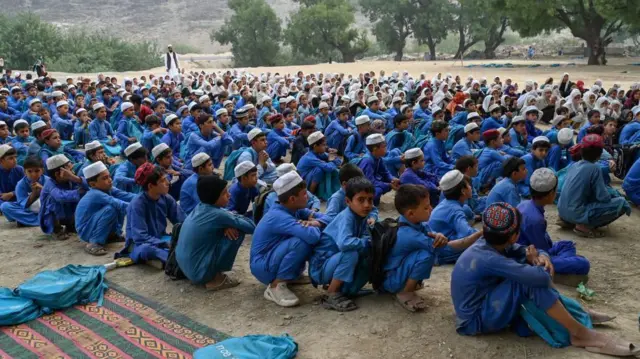
The United Nations Children’s Fund (UNICEF) has warned that the education crisis in Afghanistan is affecting both girls and boys, putting the future of a generation at serious risk. The agency states that alongside the widespread deprivation of girls’ access to education, boys’ school enrollment is also declining, leaving the country’s education system in a fragile state.
On Monday, January 24, UNICEF issued a statement revealing that in 2021 alone, approximately 2.2 million girls were denied the right to attend school. According to the agency, the continuation of this situation not only violates the fundamental rights of children but also carries long-term social and economic consequences for Afghanistan.
The international organization emphasized that education is a fundamental right of every child and that there is no justification for denying this right. UNICEF warns that the ongoing restrictive policies severely undermine the ability of the next generation to participate constructively in society.
At the same time, UNICEF and the United Nations Educational, Scientific and Cultural Organization (UNESCO) released a joint report stating that 93 percent of primary school students in Afghanistan lack adequate reading skills, highlighting the depth of the education quality crisis.
Since the Taliban regained control of Afghanistan, girls have been banned from attending schools and universities—a move that has sparked widespread domestic and international criticism. Critics argue that these policies not only violate children’s rights, especially those of girls, but also drive the entire education system towards collapse, with the Taliban administration bearing direct responsibility.