Kabul’s Groundwater Levels Drop Up to 40 Meters Amid Heavy Reliance on Private Water Companies
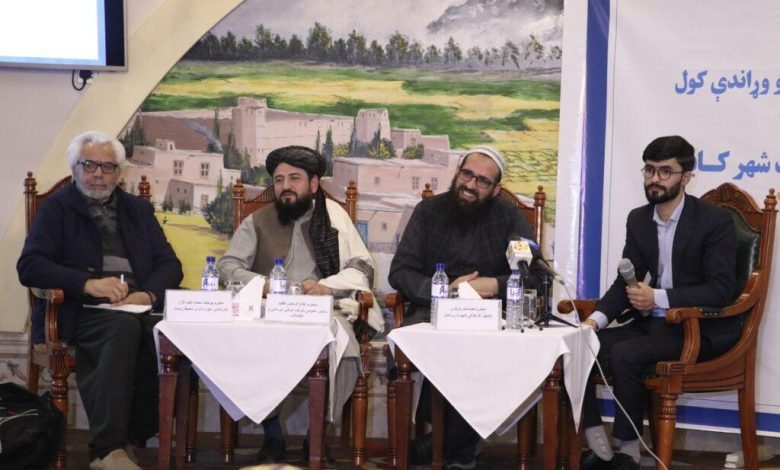
A recent survey on Kabul residents’ access to drinking water reveals a worrying water crisis in the Afghan capital, with groundwater levels falling by as much as 40 meters in some areas. According to the survey, over half of the households are forced to purchase their water from private companies, while access to government-provided water sources remains extremely limited.
The survey, conducted by the Salam Afghanistan media organization and Radio Salam Watandar under the title “Access of Kabul Residents to Drinking Water,” found that about 57 percent of participants obtain their drinking water from private companies, while only 10.5 percent have access to government water supplies. Moreover, 60 percent of respondents rated the quality of water from private companies as unsuitable.
Conducted over two months through fieldwork in 20 districts of Kabul, the survey included 1,800 participants, nearly 5 percent of whom were women. Most respondents live in houses with courtyards. The study’s primary goals were to assess sustainable access to drinking water, evaluate household expenses for procuring water, and examine the relationship between these costs and the families’ economic incomes.
Mohammad Nasir Keshawarz, a journalist from Salam Watandar presenting the survey findings, said that a substantial portion of family incomes in Kabul—nearly half—is spent on securing drinking water. This highlights that the water crisis is not only an environmental issue but also places a direct and heavy burden on household livelihoods.
According to the findings, 62.2 percent of participants reported that groundwater levels in their residential areas have dropped by up to 40 meters, and around 72 percent emphasized that the Taliban administration lacks effective supervision over private water-selling companies. This lack of oversight has enabled commercial exploitation of groundwater resources, which, according to Keshawarz, are drilled from lands belonging to the people and then sold back to them at high prices.
The organizations responsible for the survey stressed the need for sustainable research and media programs to control the water crisis, accurate reflection of social and economic challenges, drawing the Taliban administration’s and international institutions’ attention to solutions, strengthening cooperation among the population, and raising public awareness.
In a concurrent meeting presenting these findings, the Head of Groundwater Resources at the Ministry of Water and Energy stated that the design of the Lalandar dam is complete and efforts to construct it are underway. He said the dam could supply water to millions of people. He also confirmed that groundwater levels in parts of Kabul have dropped between 40 to 120 meters, though work continues on water management.
At the same event, the Deputy of Publications at the Ministry of Information and Culture highlighted the media’s role in raising public awareness about water management and consumption and called for greater attention to water reuse. The Deputy Director of the National Environmental Protection Agency pointed out Afghanistan’s minimal contribution to greenhouse gas emissions but noted that the country is severely affected by climate change and the water crisis, urging every citizen to take responsibility in managing water resources.