Herat-Khaf Railway Becomes Key Trade Route for Afghanistan
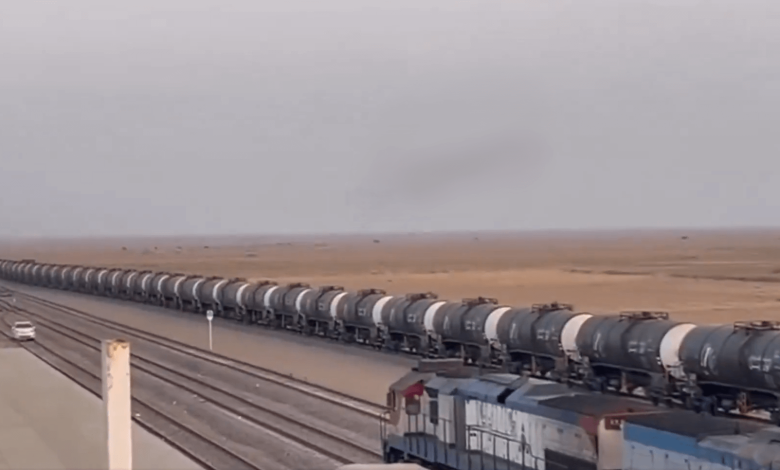
The Herat-Khaf railway, which enables the daily transfer of thousands of tons of goods from various countries to Afghanistan, has now become one of the country’s most important trade routes and plays a significant role in the movement of goods and passengers.
The “Rozanak” station in Herat province, according to local sources, has turned into a major employment center, with hundreds of Afghan youth engaged daily in loading, unloading, and ancillary services; a development that has boosted economic activity in areas surrounding the railway.
Currently, Afghanistan is directly connected by rail to three neighboring countries: Uzbekistan via the Hairatan-Mazar-i-Sharif route, Turkmenistan via the Turghundi-Herat and Aqina routes, and Iran through the Khaf-Herat railway line, which is used for transporting goods and passengers. These connections have brought landlocked Afghanistan closer to regional transit corridors.
The Taliban administration has announced plans to expand the country’s railway network and establish links with seven countries, a project that includes indirect access to China, Turkey, Russia, and Kazakhstan. However, economic experts emphasize that realizing such plans requires transparency, professional management, and the assurance of public interest—issues that have been a source of questions and concerns in recent years.
Despite the potential capacities, continued railway development and fair utilization can lead to sustainable development only if transit and economic policies are implemented without monopolies, with clear accountability to meet the needs of Afghanistan’s people and traders.