Assassination in Central Tehran: When the Shadow of the Taliban Crosses the Border
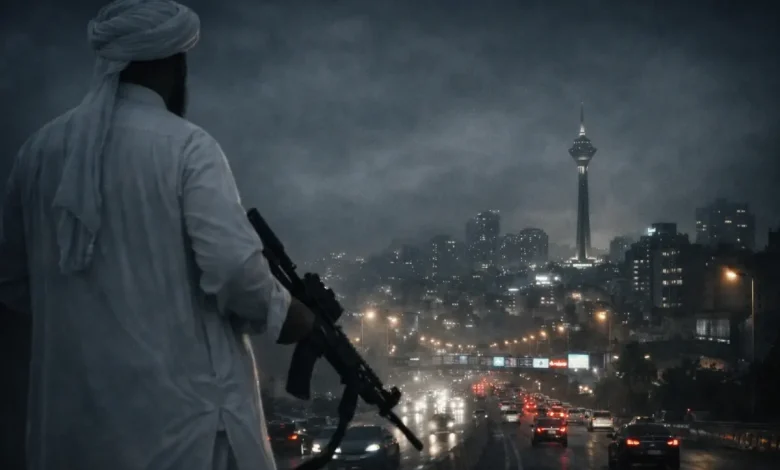
In the heart of Tehran, three renowned Afghan generals were targeted in an armed attack and lost their lives. General Ikramuddin Sarie, who had previously commanded the security forces in the provinces of Takhar and Baghlan, was a prominent anti-Taliban military figure residing in Iran.
The assassination of Sarie resembled a real battle in one of Tehran’s busiest neighborhoods. The gunfire attack, witnessed by onlookers, evoked the scene of a war rather than a mere assassination.
In any case, General Sarie and two other accompanying generals were killed by assassins. The following points are significant regarding this event:
1. Although Iranian official agencies have so far not disclosed the identity of the perpetrators, the primary accusation points to the Taliban. Similarly, the well-known assassination of Gholami — a commander close to Ismail Khan — in Mashhad was confirmed by a senior Iranian official to have been carried out by the Taliban.
Considering these precedents and Sarie’s social standing and activities, this assassination fits the Taliban’s long-standing pattern of eliminating their opponents. Public opinion does not recognize any other suspects in this matter.
Hence, this event is not merely an assassination but a message of silencing opposition. The Taliban seek to suppress their opponents wherever they reside by creating a facade of security domestically and spreading fear abroad.
2. The assassination of General Sarie in Tehran is a transnational assassination. The killing of political and military figures outside their home country, if politically motivated and organized, is more than just a criminal case.
The negative consequences of such transnational assassinations affect not only the immigrants but also the host country and its people.
By continuing a series of assassinations, the Taliban intend to raise the cost of opposing them for Afghans, but undoubtedly, the burden placed on the host country is also significant.
According to international law, host governments are obligated to ensure the security of residents within their borders, especially those known to be at risk.
From this perspective, the repeated transnational assassinations of prominent Afghan figures require Iranian security and judicial institutions to treat the issue as a regional security threat, rather than just a criminal incident, conducting rapid, effective, and impartial investigations and publicly disclosing the results transparently.
If it is proven that the Taliban were involved in the assassination of General Sarie, as in the case of Gholami’s assassination, then this group should be recognized by public opinion, international bodies, and governments — particularly the Islamic Republic of Iran — as a threat to regional security. The host country must demonstrate that its territory will not be used by the Taliban to settle scores with their opponents.
It is important to note that leaving such crimes unanswered not only leaves one crime unaddressed but legitimizes it; obviously, no one in Iran supports legitimizing assassination, murder, or crime.
3. By carrying out violent acts on Iranian soil, the Taliban have repeatedly undermined Iran’s national security. Each time, they have deflected responsibility by blaming rogue elements and refusing to accept accountability.
Field evidence shows that various incidents – from the terrorist attack in Kerman to terrorist assaults in Rask and Chabahar, and multiple acts of assassination and kidnapping — have all been carried out with Taliban support and according to their plans within Iran.
Meanwhile, the Taliban’s appointee at the Afghan Embassy in Tehran was warmly welcomed during a recent visit to Chabahar, with chants of “Long live the Islamic Emirate.”
Apparently, Iran’s national security red lines concerning the Taliban have widened considerably, failing to alarm Iranian officials even when separatists cheer on terrorists.
Now, imagine if Iran’s ambassador in Kabul visited a religious school in a remote Afghan village and was received with slogans of “Long live the Islamic Republic of Iran.” How would the Taliban react? Would they allow such a thing? Certainly not.
It is clear that if these assassinations do not impose costs on the Taliban, considering the connections between the Taliban and Iranian separatists, Iran’s public security may well be compromised.
Seyed Ahmad Mousavi, Missionary