Serajuddin Haqqani’s Calculated Show of Power in Kandahar Signals Strong Intra-Taliban Rivalry
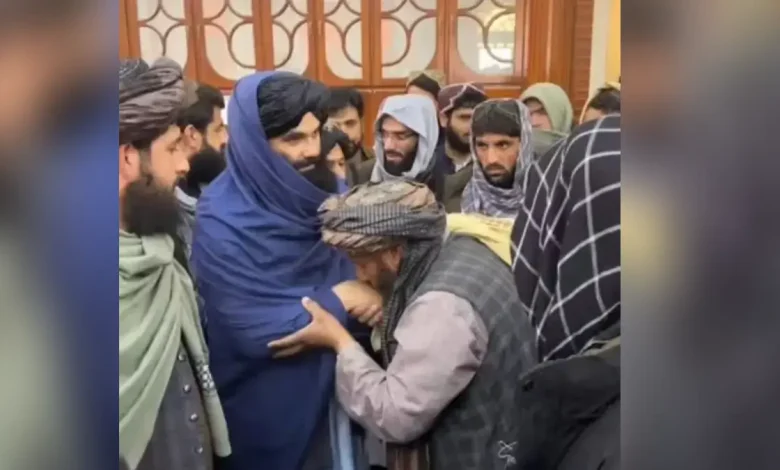
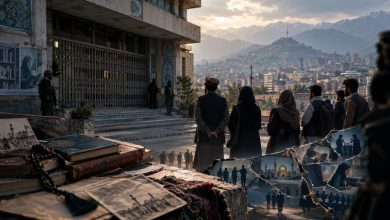
Serajuddin Haqqani traveled to Kandahar to attend the funeral of Mullah Omar’s mother. Even if reports of his participation in a security meeting in Kandahar alongside Mullah Hebaullah, mediated by Mullah Yaqub between him and the Taliban leader, are accurate, the reception he received in Kandahar signifies a clear display of power by the head of the Haqqani network within the Taliban leadership’s power center.
Over the past four years, the Taliban Emir has significantly consolidated his control over the power structure by appointing loyalists and physically eliminating intra-party rivals such as Khalil Haqqani and others.
Mullah Hebaullah’s actions had reinforced speculation that, amid internal Taliban struggles, Serajuddin Haqqani had been sidelined, with Mullah Hebaullah and his team holding the main decision-making authority in the Taliban’s administration.
However, Serajuddin Haqqani’s power display during his Kandahar visit—a week after appearing before his supporters in Khost—indicates that he remains a powerful intra-group rival to Mullah Hebaullah. This remains true even as supporters of Mullah Hebaullah respond to Haqqani’s explicit criticisms of the Taliban leader’s authoritarianism.
Last month, unconfirmed reports circulated on social media about a failed assassination attempt targeting Mullah Hebaullah in Kandahar. If these reports are true, they reveal a notable security breach in Kandahar and suggest that the physical elimination of the Taliban leader is not beyond reach—whether by internal rivals or external forces.
Evidence, however, indicates that the removal of Mullah Hebaullah is currently not on the agenda of foreign actors or Western powers, unless his opposition to planned projects for Afghanistan becomes so intense that it jeopardizes their success.
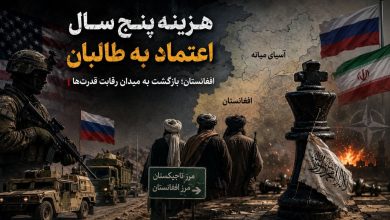
Pakistan, as the main Taliban backer and a close associate of the Haqqani network, seeks to maintain Mullah Hebaullah’s position because managing Pakistani Pashtuns requires preserving the religious authority of Pashtuns outside Pakistan, with Mullah Hebaullah being the best candidate for that role. Western powers have so far voiced no strong opposition to keeping Mullah Hebaullah, as they recognize his importance in legitimizing the group’s structure for fighters. However, they appear inclined to implement a Saudi Arabia-style model in Afghanistan.
Although Saudi Arabia differs significantly from the Taliban in terms of structure and stability, it offers a relatively successful model of governance based on religious legitimacy combined with technocratic management and cooperative engagement with the West and the United States.
In Saudi Arabia, religious figures supported by the West and the US hold secondary decision-making roles behind technocrats and politicians like Mohammed bin Salman.
In Afghanistan, the US and the West likely want to manage governance and security through figures such as the Haqqani family, Mullah Baradar, and Mullah Yaqub—who are open to cooperation with the West—while retaining religious figures like Hebaullah, Hakim Haqqani, and others in secondary power circles behind them. This approach aims to advance US projects in governance, uphold the religious legitimacy of the administration, and address Pakistan’s concerns—as the US contractor—regarding the management of Pashtuns on both sides of the Durand Line.
Serajuddin Haqqani’s recent maneuvers may be a prelude to this plan. Should Hebaullah and his allies acquiesce to such demands, they will remain part of the West’s and US’s puzzle in Afghanistan’s security and power dynamics.
Seyed Ahmad Mousavi, Mubaligh