George W. Bush Foundation Criticizes Trump Administration’s Immigration Policy
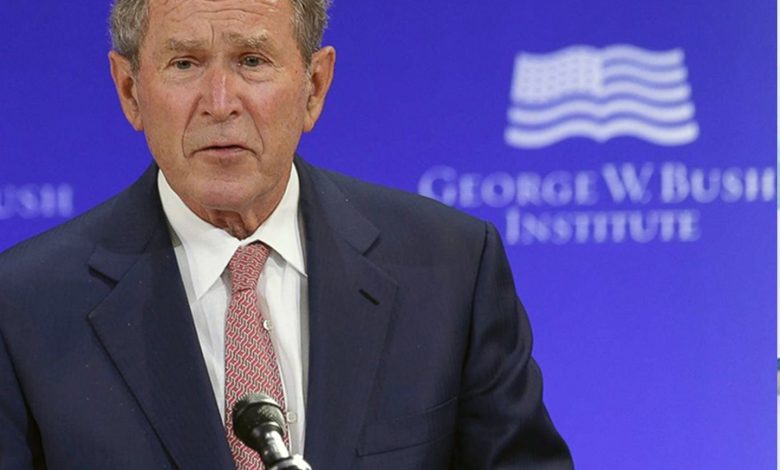
The George W. Bush Foundation has criticized the Trump administration’s new immigration policy, emphasizing that depriving Afghan migrants and citizens of other countries from the legal immigration process due to the crime of one individual contradicts principles of justice.
This stance came after last month, following a shooting that targeted two National Guard members in Washington D.C., an Afghan citizen—who had previously cooperated with the U.S. Central Intelligence Agency (CIA) and whose asylum request was accepted earlier this year—was accused. After this incident, the Trump administration halted immigration applications from citizens of Afghanistan and 18 other countries and imposed travel restrictions.
On Friday, the Bush Foundation wrote on social media that the actions of one individual accused of a “horrific crime” disrupted the legal immigration process for citizens of 18 countries. Afghan migrants, both inside and outside the United States, now face an uncertain future. The foundation added that it is unjust to turn away all Afghan immigrants and migrants from other countries because of the crime of one person.
The foundation called on political leaders to avoid collectively targeting immigrants who legally live in the U.S. or intend to travel, and instead examine whether the incident could have been prevented. The Bush Foundation also emphasized the United States’ support for Afghans who, over the past two decades, have risked their lives working with the U.S. to build a better future.
In response, Mike Davis, a senior legal advisor close to Trump, said the former president should refrain from public criticism and leave the field to the current president. At the same time, Stephen Miller, the White House Chief of Staff Deputy and Homeland Security Advisor, also criticized the Bush Foundation’s statements and warned about the consequences of broad immigration from countries he described as “high-risk.”
This verbal tension arises as U.S. immigration policy has once again become one of the most controversial political topics in the country.