Kandahar Farmers Harvest First Edible Mushrooms in Push to Replace Poppy Cultivation
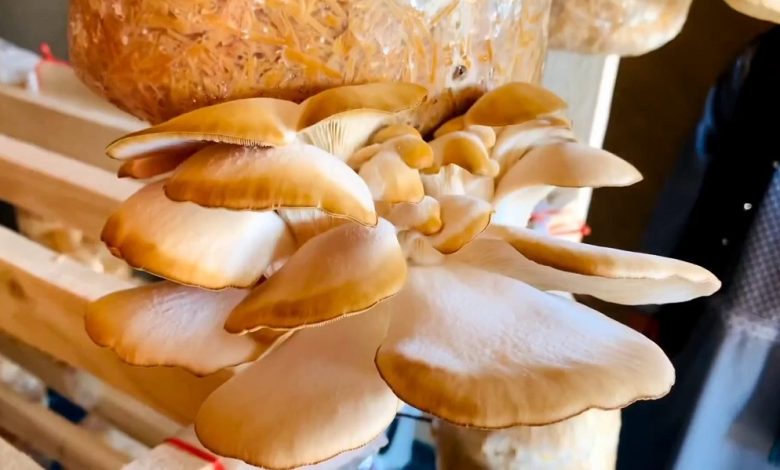
In Kandahar province, a group of farmers have begun harvesting their first crop of edible mushrooms, a project established in collaboration with the United Nations Office on Drugs and Crime (UNODC) and the Netherlands Committee for Afghanistan. These mushroom farms were set up in the Khakrez district as part of efforts to support local agriculture.
The Kandahar Directorate of Agriculture, Irrigation, and Livestock announced that essential equipment worth nearly $20,000 was provided to 30 needy families, enabling the cultivation of mushrooms in the district. Officials said the objective of the program is to improve farmers’ livelihoods, promote alternatives to poppy cultivation, and introduce high-yield, profitable crops.
According to Mohammad Hanif Haqmal, spokesperson for the Kandahar Directorate of Agriculture, 23 types of tools and mushroom spores were distributed to these families to help them establish small-scale, family-run farms and earn higher incomes. This marks the first official launch of edible mushroom cultivation in Kandahar, with plans underway to expand the initiative to other provinces. In local markets, the price of mushrooms ranges from 350 to 400 Afghanis per kilogram.
Representatives from the Netherlands Committee confirmed the provision of tools and materials to the farmers, noting that mushrooms present a suitable alternative to poppy and pledged continued support for the farmers. Abdulhadi Dawoodzai, the organization’s representative in Kandahar, emphasized that the $20,000 support was aimed at reducing the reliance on poppy farming. Local farmers view the program as a viable path away from poppy cultivation.
In recent months, Kandahar’s agricultural department has initiated new efforts to identify and promote alternative crops. While such support offers hope for a better future for farmers, maintaining and expanding these programs requires sustained international assistance. Challenges remain due to constraints and obstacles arising from the Taliban administration’s policies, posing serious risks to the livelihoods of local farmers.