Afghanistan’s Economic Paradox: Statistical Growth Amid Deepening Poverty
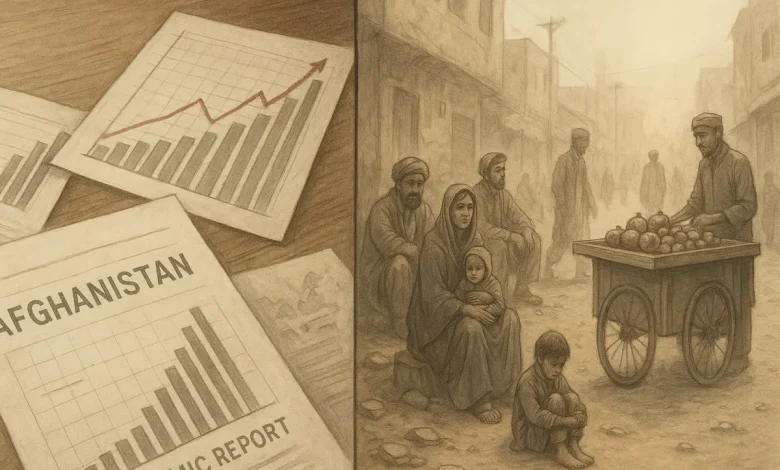
Afghanistan is grappling with a stark contradiction: while recent reports from some economic institutions cite “modest economic growth” in 2024 and 2025—growth that some analysts see as signs of relative stability after the 2021 economic collapse—the reality on the ground tells a different story.
On the streets, people face shrinking household budgets, laborers search for jobs in vain for weeks, families struggle to afford daily meals, and young Afghans see no promising future ahead.
This widening gap between reported “growth figures” and daily life has become one of the most glaring paradoxes of Afghanistan’s economy, raising serious questions about the foundations and sustainability of this purported growth.
An Economy Cut Off from the World: Growth in a Global Vacuum
Today, Afghanistan faces an unprecedented period of political isolation. Apart from Russia, no country has recognized the Taliban government. Most international interactions, foreign investments, and access to global markets are either blocked or severely restricted.
This isolation has had direct consequences for the economy:
– Foreign investment has plunged to nearly zero.
– Money transfers and formal trade have been disrupted.
– Banks are unable to connect with the global financial system.
– International aid—which once formed the backbone of the country’s budget and public services—has drastically declined.
Despite these challenges, Afghanistan has recorded a form of “statistical growth,” largely due to relative price stability, limited export management, and attempts to control the currency market.
However, this economic uptick is less a result of genuine dynamism and more a product of restricted internal movement—an economy moving in a closed loop with no broad access to the outside world, unable to unlock its true potential.
Widespread Poverty Undermines Statistical Growth
According to credible international assessments, over half of Afghanistan’s population lives below the poverty line. While the economy appears to be “growing,” this growth is not felt at the household level.
The signs of crisis in daily life are unmistakable:
– Widespread unemployment, especially among youth
– Rising food prices in some provinces
– Declining purchasing power
– Growing food insecurity in rural and drought-affected areas
– Increasing child labor as a survival strategy
– Rising internal migration due to poverty and lack of opportunities
These conditions indicate that, at best, the country’s economic growth is unbalanced—visible at the macro level but absent from the people’s tables.
A Burden on the People: Livelihoods Grow Heavier by the Day
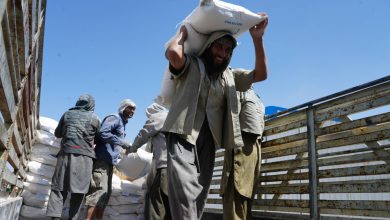
Conversations with citizens paint a clearer picture. Market vendors in Kabul report lower incomes compared to two years ago, while costs have increased. Daily wage laborers in Herat say they sometimes go entire days without finding a single hour of work. In Badakhshan and Ghor, families are forced to sell personal belongings just to afford bread.
This harsh reality suggests to analysts that “official economic growth” has yet to translate into improved livelihoods.
Why Is This Growth Fragile? Four Weak Pillars of Afghanistan’s Economy
1. Lack of Sustainable Investment and Production
Without foreign and domestic investment, genuine and long-term growth is nearly impossible. A lack of legal and political security has made the private sector cautious and inactive.
2. Overreliance on Limited Exports
Much of Afghanistan’s exports are based on mineral and agricultural products with low value-addition. As a result, any fluctuations in prices or disruption in export routes can have immediate and severe impacts on the domestic market.
3. Collapse of the Formal Banking System
Limited access to foreign reserves, banking sanctions, and restrictions on financial transactions have forced both people and businesses to rely on informal networks—a fragile and unstable situation.
4. Decline in International Aid
Until 2021, foreign aid was the main pillar for providing public services. The decline of such support has placed additional strain on the economy, leaving sectors such as education, health, and infrastructure in crisis.
Two Narratives, One Economy: What Authorities Say vs. What People Experience
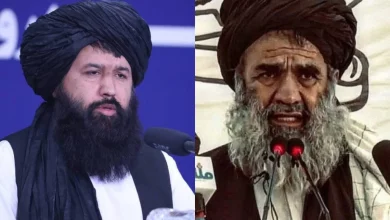
Taliban officials often boast about “economic stability,” “controlled inflation,” “domestic production support,” and “increased exports.” But the reality among the public tells a different story.
Experts argue that lower inflation is largely due to reduced purchasing power and falling demand, rather than scientific economic management. Similarly, the apparent rise in exports stems more from raw mineral extraction—an unsustainable practice—than from expanded production capacity.
What Comes Next? Three Scenarios for Afghanistan’s Economic Future
Analysts suggest Afghanistan stands at a critical crossroads. The coming years could see the country trapped in prolonged stagnation or slowly emerge from its current impasse. There are three likely paths:
Scenario 1: Status Quo — Chronic Stagnation and Entrenched Poverty
With no structural changes or new international engagement, the economy continues to function at a low, stagnant level. Production remains limited, unemployment rises, and widespread poverty becomes normalized. This is a frozen economy — one that moves, but goes nowhere.
Scenario 2: Limited Engagement — Small but Effective Openings
In this path, Afghanistan engages with the world through regional channels without gaining formal recognition. This includes cross-border trade, transit cooperation, and small-scale economic agreements with neighboring countries. Such steps may ease the burden of isolation and offer marginal improvements in employment and exports, but will fall short of achieving real growth or sustainability. In other words, this offers a “breath of fresh air,” not a “revival.”
Scenario 3: Gradual Integration into the Global Financial System — A Hard but Sustainable Path
In this scenario, Afghanistan undertakes structural reforms, redefines economic laws, and creates an environment of trust for investors, reintegrating with global financial and trade networks. The result could be renewed investment, increased production, enhanced government revenue, and sustainable job creation. However, such a future hinges on deep changes: improved governance, legal guarantees for economic rights, financial transparency, and rebuilding international trust.
Conclusion: An Economy at a Crossroads
Afghanistan today finds itself at one of the most pivotal economic junctures in the past two decades. Official figures may highlight elements of “growth,” but daily realities reveal a story of chronic poverty. This discrepancy between data and lived experience places the Afghan economy before a profound decision: remain in a closed, fragile, and stagnant cycle, or initiate fundamental reforms, pursue targeted engagement, and progress toward gradual reintegration with the global economy.