Bangladesh Declares Former PM Sheikh Hasina Will Be Arrested if She Returns from India
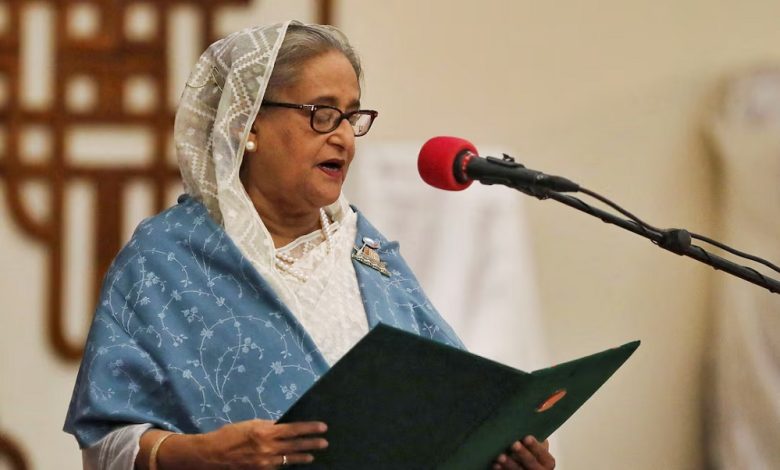
The Bangladeshi government has announced that Sheikh Hasina, the former prime minister, will be arrested and detained if she returns from India. She fled to India following the protests of 2024 and plans to return to her country in December.
Shama Ubaid Islam, Bangladesh’s Minister of State for Foreign Affairs, told Reuters on Sunday that Dhaka has requested Hasina’s extradition from India and expects New Delhi to comply with the existing extradition treaty. He added that no formal discussions with India have taken place regarding deploying a plane to return Hasina.
India’s Ministry of Foreign Affairs did not immediately respond to a request for comment. In April, the ministry stated that it was reviewing the extradition request for Hasina.
Hasina faces the death penalty in Bangladesh, and her party, the Awami League, was banned after the 2024 uprising that ended her long tenure in power. The United Nations reported that up to 1,400 people were killed during the unrest.
In August 2024, amid escalating protests demanding her resignation, Hasina fled Dhaka. She subsequently applied for a passport and new identity card, but the government rejected these applications.
The Awami League announced a week of protests and rallies this month in support of Hasina’s return, scheduled to conclude with a nationwide shutdown on November 19. According to local media, police have recorded dozens of incidents over the past ten days, including homemade bomb explosions and car burnings in at least 28 districts, with several police officers and civilians wounded.
Shama Ubaid Islam described these acts of violence as efforts to sustain Hasina’s party. In contrast, Khaled Mahmud Chowdhury, a senior Awami League official, blamed the current political structure for the violence.
The Minister of State for Foreign Affairs also said Bangladesh is increasing diplomatic pressure on Myanmar to facilitate the return of Rohingya refugees. This statement followed the International Court of Justice ruling that Myanmar’s security forces committed state-supported genocide through the killing of thousands and widespread sexual violence against the Muslim minority in 2017.
Myanmar has criticized the ruling, stating that the Rohingya can only return when conditions permit. According to Ubaid Islam, the refugees deserve to return with dignity and security, and the international community must exert more pressure on Myanmar and the Arakan Army militant group.
Approximately 1.2 million Rohingya live in Bangladesh, and repeated efforts to repatriate them have failed. The civil war in Myanmar and the near-complete control of Rakhine State, the primary home of the Rohingya, by the Arakan Army have further complicated their return.