Trump’s Remarks on Afghan Migrants Stir Controversy Over U.S. Responsibility
In recent days, U.S. President Donald Trump’s renewed comments on reevaluating the status of Afghan migrants living in the United States have once again highlighted how populist politics can turn an isolated incident into a tool for stoking fear and manipulating public sentiment.
Reacting to an attack by an Afghan national on American service members, Trump chose not to condemn the individual’s actions, but instead targeted an entire nation—one that has suffered decades of war, instability, and decisions made by global powers, including the United States.
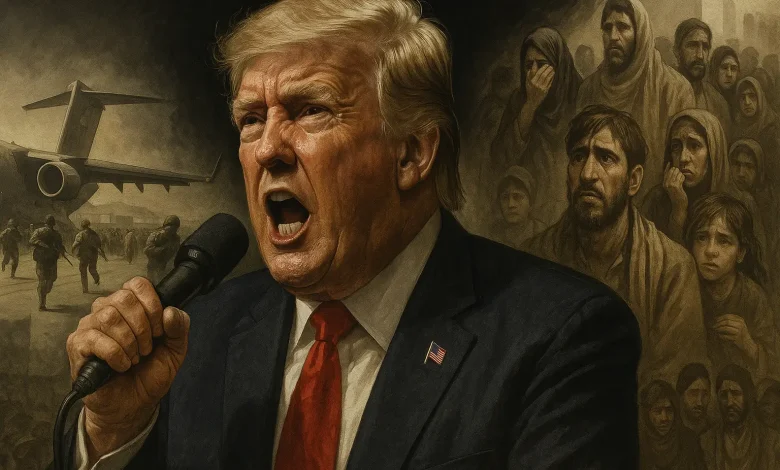
In his remarks, Trump displayed footage from the chaotic evacuation during the fall of Kabul and described the Afghan evacuees as “crazy,” crossing the line from criticism into overt insult. He portrayed the arrival of at-risk Afghan citizens not as a humanitarian necessity, but as a favor generously granted by the U.S.—a narrative sharply at odds with the reality.
America’s 20-year presence in Afghanistan was not merely a military mission but a web of political, security, and strategic decisions that became intertwined with the country’s institutions. The hasty withdrawal and de facto handover of power to the Taliban placed millions at immediate risk and triggered an unprecedented wave of migration. Rescuing even a portion of these people was not a kindness, but a direct responsibility stemming from that presence and the chaotic exit.
What is particularly dangerous now is not just Trump’s offensive language, but the deliberate attempt to turn a singular incident into a broader identity and security crisis for an entire nation. Such narratives dehumanize migrants, portraying them as threats, and pave the way for harsher policies, social pressure, and institutionalized discrimination.
Today, more than ever, it must be emphasized that the wrongdoing of one individual rests solely on that individual—not on a nation still struggling under the ashes of war and bearing the consequences of the decisions made by global powers.