Future in Afghanistan Is Not Promising After Taliban Rule, Women’s Tribunal Judge Says
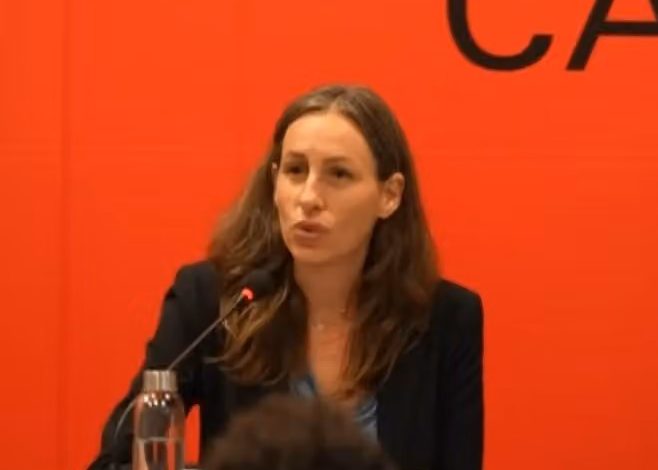
Elisenda Calvet, a judge on the People’s Tribunal for Afghan Women, says that after five years of Taliban rule, the situation has not improved and the outlook for the future is “not promising.”
She made the remarks on Thursday at a meeting marking the first anniversary of the tribunal in Madrid, Spain. The tribunal, she said, emerged from civil society and focuses on people, not governments.
Calvet said the civic initiative, despite being “popular” in nature, retained the structure of a court, with provisions for a prosecutor, judge, witnesses and a verdict process. According to her, the tribunal’s panel of judges and experts included legal scholars, psychologists, journalists and Sharia experts.
The judge said the tribunal’s hearings were held in Madrid and testimony was heard from 24 Afghan women from inside and outside Afghanistan. She added that the organisers tried to ensure the witnesses came from different ethnic groups and social classes so the process would remain as inclusive as possible.
Calvet also warned that some of the witnesses were at risk. She said that although the Taliban administration did not attend the hearings, it was following the process, and this created security concerns for some of those giving testimony.
She stressed that what is happening in Afghanistan is “a set of laws, decrees and structures” that systematically targets women and girls. In the tribunal, she said, gender-based violence was examined as a criminal issue, not a cultural one.
The judge of the People’s Tribunal for Afghan Women also said that while there is talk of a “crisis in international law,” such initiatives are important for advocacy and for strengthening the credibility of the law. She noted that Afghan women had also spoken of “gender apartheid” during the first Taliban rule in the 1990s, and that this is not a new phenomenon.
Public hearings of the People’s Tribunal for Afghan Women began in Madrid on 16 Mizan last year and ended on Friday, 18 Mizan, according to the organisers. The tribunal aims to draw global attention to the targeted repression of women and girls in Afghanistan, document what the organisers call “crimes against humanity, especially gender discrimination and gender persecution,” and increase international pressure to hold the Taliban administration accountable.