Taliban Strikes Expose Tehran’s Miscalculation
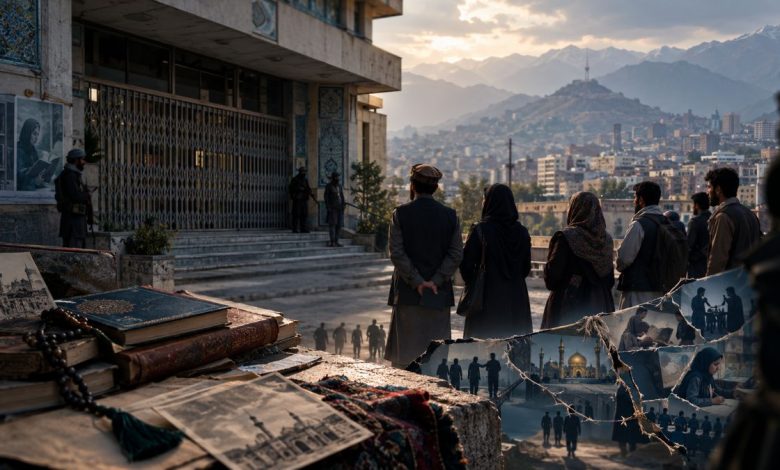
Taliban lobbyists in Tehran have over the past few months described the fact that no attack was carried out against Iran from Afghan territory during the war as a sign of the group’s alignment with Iran.
Even if we set aside the fact that refraining from attacking a neighbouring country from its territory is an obligation, not a bargaining chip, we still must answer this question: why was there not much military activity against Iran from Taliban-controlled Afghanistan, while most countries in the region were in some way involved in the war or supporting the United States and Israel?
The answer lies in the extent of Iran’s social influence in these countries.
Unlike the Gulf states and Jordan, Iran has considerable social capital in countries such as Iraq, Pakistan and Afghanistan, and any overt action against Iran from these countries’ territory could have triggered broad waves of public opposition, as happened in Iraq.
Naturally, the depth of social influence and the presence of supportive human networks can raise the cost for a foreign power seeking to use a country’s territory against a neighbouring state. In Afghanistan as well, if the United States had used Afghan territory in a war against Iran, Iran’s social capital in Afghanistan could naturally have been mobilised against both the US and the Taliban.
Under such circumstances, the real question is: to what extent does Iran’s social influence among the people of Afghanistan make action against Iran costly? Not whether the Taliban cooperated with the United States or not.
The Taliban’s actions over the past month can, from one perspective, be seen as neutralising precisely these Iran-linked capacities.
The Taliban has put pressure on all individuals and all institutions that, in a full-scale war, might stand with Iran rather than the United States and Israel, and by arresting them and seizing their property and facilities, it is effectively removing them from the field. The group has even completely neutralised organisations it itself created but which it suspects might one day side with Iran, such as the Supreme Commission of Shiites.
Meanwhile, a fatal mistake by Tehran is helping to complete the Taliban’s plan to destroy Iran’s capacities in Afghanistan entirely.
Iran’s inaction in response to the sharp shutdown of Shiite scientific, cultural and media centres — which is effectively also a slap in the face of Iran — will be the final nail in the coffin of the relationship between Iran’s strategic allies in Afghanistan.
If there are sensible people in Tehran, especially in the Foreign Ministry, who can properly assess the passivity of their diplomats in Kabul regarding recent events, they will clearly understand that this is not merely about the closure of a few scientific, cultural and media centres aligned with Iran. Rather, it is about the erosion of a social capital that Iran has built over years in Afghanistan and that, in times of crisis, can provide Tehran with social depth and a deterrent capacity.
For five years, the Taliban has repeatedly said, in both word and deed, that it is not a friend of the Islamic Republic of Iran. Now, after being rude to Iran’s deputy ambassador in Kandahar, it is also trying to destroy part of Iran’s power that has arisen from its social, cultural, religious and linguistic ties with the people of Afghanistan.
But Tehran’s silence and inaction in the face of the blows it is taking from the Taliban in Afghanistan has another damaging effect as well.
If Afghanistan’s Shiites and Persian speakers see no support, or even any meaningful reaction, from Tehran to Taliban pressure, it is natural that their trust in and sense of connection with Iran will weaken, and that in times of need and hardship they will no longer feel obliged, as they once did, to support Iran.
Shiites and Persian speakers are now, on the one hand, losing all their capacities under Taliban pressure, and on the other, seeing their mental bond with Iran break down because of the continued indifference of an ally they have spent years supporting.
This is the subtle point that Tehran must take seriously. If it does not give it due importance, it must consider this: if one day Afghanistan becomes a platform for operations against Iran, will Iran still have enough social ties in Afghan society to make such use of Afghan territory costly for the enemy?
Iran still has human, social, cultural and religious capital among part of Afghan society. But if this capital is eroded by Taliban pressure on one side and Tehran’s inaction on the other, then one should no longer expect that same society to stand with Iran in times of need.
Seyed Ahmad Mousavi Moballegh