UK to launch new refugee scheme prioritising Afghan women
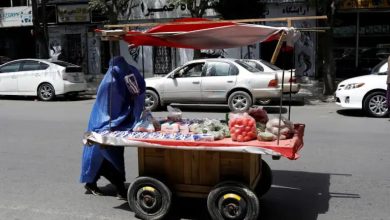
Britain will launch a new refugee admission programme with priority for Afghan women, the Guardian has reported, saying the scheme will also favour Palestinian refugees and people with disabilities. According to the report, the programme is being reactivated after an effective two-year pause.
UK Home Secretary Shabana Mahmood is due to unveil the plan on Monday at the Labour Party conference. The Guardian said people admitted through the route would be able to gain permanent residency sooner than those who reach the country through irregular means, including by small boat.
The newspaper said the UK government expects Afghan women and girls and Palestinian refugees to make up about a quarter of those accepted when the scheme begins. However, the number admitted in the first phase will be limited, and an annual cap will be set.
UK Home Office sources told the Guardian the programme is likely to begin with the admission of a few hundred people. If irregular migration falls, the sources said, the number accepted in later years could rise to several thousand.
Under the report, eligible applicants will be identified by the UN High Commissioner for Refugees and the International Refugee Assistance Project. They must also undergo security and criminal-record checks before entering the UK.
The British government said vulnerable women and girls, people with disabilities and those in immediate need of protection will be prioritised. Family members may be relocated together under the scheme, but this facility will not extend to close relatives.
According to the Guardian, British officials have described the programme as part of the new government’s effort to balance immigration control with support for the most vulnerable refugees. However, migration experts and refugee charities said the scheme’s limited capacity would restrict its impact on reducing Channel crossings.
Madeleine Sumption of the University of Oxford said the plan is rooted more in a humanitarian principle and is intended to reflect Britain’s contribution to supporting the most vulnerable refugees. She added, however, that there is no reason such a programme alone would significantly reduce irregular arrivals.
Jon Feeney, senior analyst at the Refugee Council UK, also welcomed the creation of safe and legal routes, but said such programmes can only weaken human-smuggling operations if they are implemented on a large scale. The Guardian said the plan is also likely to face criticism from right-wing parties, including Reform UK.
Fawzia Koofi, a former member of Afghanistan’s parliament, welcomed the new UK programme and said that after four years of advocacy and campaigning, calls for support for at-risk Afghan women have finally been answered. She expressed hope that the UK Home Office would create a mechanism so that at-risk women, especially those who have stood up to Taliban restrictions, can benefit from the scheme.
The UN High Commissioner for Refugees is the main UN body responsible for identifying and supporting refugees in different countries. In recent years, Britain has also swung between creating legal routes and restricting irregular entry amid intensifying debate over migration.