Badakhshan clashes raise security concerns in Tajikistan and Uzbekistan
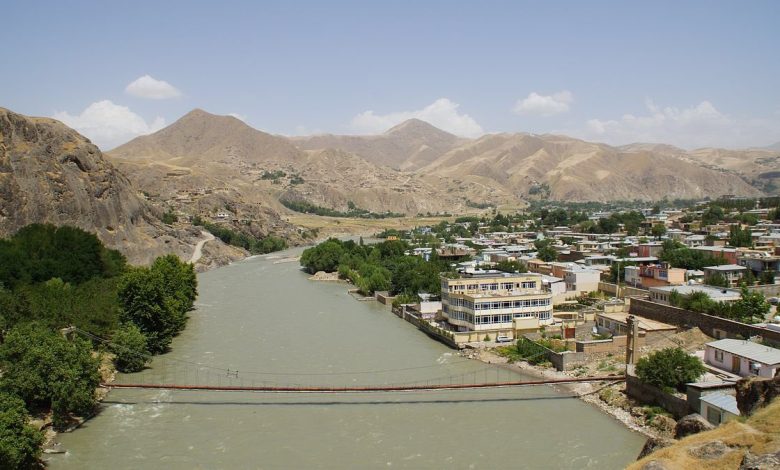
A Central Asia researcher says the rise in armed clashes in Badakhshan has turned the province into a direct border security concern for Tajikistan, and that if instability spreads, Uzbekistan’s trade and transit interests will also be affected. He wrote that the limited spread of violence from Afghanistan across the border shows the risk of instability spreading is no longer merely a hypothetical possibility.
Robert Cutler, a Canadian analyst on Central Asian affairs, wrote on Tuesday on the Central Asia Times website that recent clashes between the Taliban administration and forces linked to Jumakhan Fatih in Badakhshan’s Nasi district, despite ending after Fatih surrendered, are a sign of growing instability in northeastern Afghanistan. He said that between January 2025 and August 2026, 22 incidents linked to armed groups opposed to the Taliban administration were recorded in Badakhshan, compared with four in the second half of 2025.
The clash between the Taliban administration and Jumakhan Fatih’s forces began on 20 August in Nasi district. According to the report, the Taliban administration’s attempt to seize military equipment and vehicles from Fatih’s forces sparked the incident, although a dispute over the disarmament of local forces, the scope of Taliban commanders’ authority and control of gold mines had already existed. Cutler wrote that since the Taliban returned to power, disputes over gold mines have several times led to clashes between local commanders and Taliban forces in Badakhshan.
After nearly a week of fighting, Jumakhan Fatih surrendered to the Taliban administration on 26 August. A few days later, Taliban spokesman Zabihullah Mujahid said his case was being prepared for trial.
According to Cutler, the immediate consequences of these clashes were seen on the Tajik border. Nasi district borders Tajikistan’s Darvoz district, and on 22 August, gunfire from Afghan territory across the border killed a 21-year-old woman in her home and damaged several residential houses.
Following the incident, Tajikistan’s foreign ministry sent an official protest note to the Taliban administration and called for respect for the country’s border and prevention of such incidents from happening again. The Taliban administration’s foreign ministry also confirmed the woman’s death and expressed regret, but said responsibility for the incident lay with what it called “spoiler and opportunistic elements.”
Cutler also referred to a UN Security Council report on Islamic State Khorasan’s activity in northern Afghanistan, especially Badakhshan. Based on that report, Tajikistan and Uzbekistan have expressed concern about the possible creation of hidden Islamic State Khorasan cells and the presence of their own citizens in the group’s ranks.
He wrote that for Uzbekistan, the immediate risk is more economic in nature. Although no reports have so far been published of disruption to trade, customs, railways or electricity exports between Afghanistan and Uzbekistan, instability in northern Afghanistan could put Tashkent’s transit and trade plans at risk.
Afghanistan has been described as Uzbekistan’s third-largest export market, and the country’s exports to Afghanistan reached $817.8 million in the first five months of 2026. One of Uzbekistan’s most important trade routes in Afghanistan is the Hairatan-Mazar-i-Sharif railway, which connects the Uzbek border to the commercial centre of Balkh province. The analyst wrote that while there is so far no sign of Badakhshan’s insecurity affecting this route, Uzbekistan’s growing reliance on trade routes through northern Afghanistan has increased the importance of stability in these areas.
Cutler added that Uzbekistan is at the same time pursuing a larger plan to connect with Pakistan and South Asian ports through Afghanistan. The project, known as the Trans-Afghan railway, has not yet become operational and remains in the planning and review stage. Badakhshan province in northeastern Afghanistan shares a border with Tajikistan, and any instability in this area could have regional consequences beyond a local incident.