Metqi Stresses Joint Roadmap Development Between Afghanistan and Regional Countries
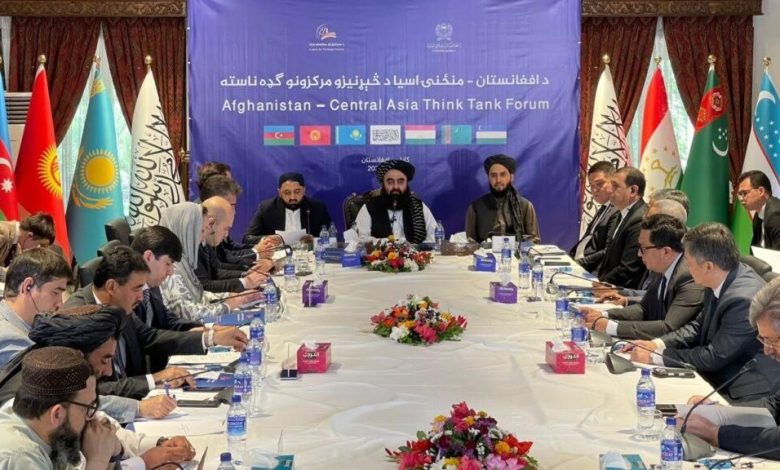
A joint meeting of heads and researchers from strategic studies centers in Afghanistan, Central Asian countries, and Azerbaijan was held in Kabul. During the meeting, Amir Khan Metqi, acting Foreign Minister of the Taliban administration, emphasized the importance of developing a comprehensive roadmap for the future of relations and creating a regional indigenous narrative.
The event was hosted by the Strategic Studies Center of the Ministry of Foreign Affairs and included representatives from the presidential offices of Uzbekistan, Turkmenistan, Kazakhstan, Kyrgyzstan, Tajikistan, and Azerbaijan. The discussions focused on expanding scientific cooperation, enhancing regional connectivity, and establishing a regular framework for future coordination.
In his opening speech, Metqi referred to developments in the international order and described Afghanistan’s relations with regional countries as “pragmatic and expanding,” stating that the goal is to elevate these relations to a deeper level of integration. He identified cooperation among think tanks and research institutions as essential to achieving this goal.
The acting Foreign Minister also stressed the necessity of forming a “local narrative” about regional developments and urged researchers to analyze the realities and challenges of the region from an internal perspective. According to him, scientific collaboration can pave the way for high-level political decisions.
Another key point of the meeting was the emphasis on establishing an executive mechanism to follow up on political agreements. Metqi referred to the upcoming “Afghanistan-Central Asia Consultative Dialogue” scheduled for April 5, 2026, in Kabul, stating that the time has come to turn political commitments into practical and executable proposals. This issue faces challenges due to the lack of transparent and accountable structures, raising questions about how practical implementation will be ensured.
Research support for major regional projects was also a central topic. Projects such as CASA-1000, TAPI, TAP, the Lapis Lazuli Route, and the Afghan-Trans railway were mentioned as significant transit and economic initiatives, with an emphasis on conducting forward-looking studies and precise evaluations of their shared benefits. Due to its geographical position, Afghanistan has always been considered a bridge between Central and South Asia; however, realizing this role requires sustainable stability and constructive regional interaction.
The management of transboundary crises, including climate change, water scarcity, air pollution, and the impact of wars on food and energy security, was also placed on the research centers’ agenda.
While the Taliban administration seeks to strengthen its regional standing through scientific and diplomatic meetings, many observers emphasize that the continuity and effectiveness of such initiatives depend on establishing trust, transparency, and accountability within the country. Without these prerequisites, turning theoretical agreements into tangible achievements will face significant challenges.