Feinstein Center Report: Taliban Have Established Systematic Gender-Based Discrimination in Afghanistan
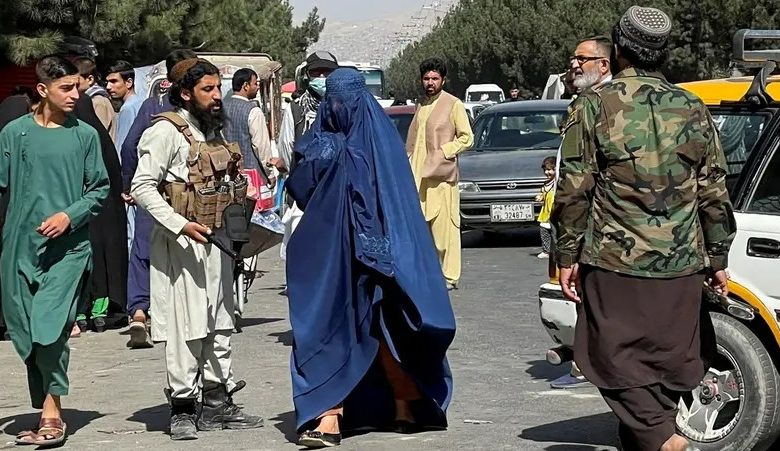
A new report from the Feinstein International Center at Tufts University reveals that the Taliban administration has extensively and systematically violated Afghanistan’s legal obligations under the Convention on the Elimination of All Forms of Discrimination Against Women (CEDAW). Published on Friday, June 5, 2024, this report provides the first structured legal assessment of the Taliban’s performance from 2021 to 2025 in relation to this international convention.
Based on 379 sources, including United Nations documents and verified testimonies, the study states that the Taliban’s policies and decrees have created a comprehensive system of gender discrimination that uniformly targets women’s education, employment, freedom of movement, healthcare services, and social participation. The authors emphasize that these restrictions are not occasional or isolated; rather, they function as part of a “systematic and reinforcing” framework, resulting in the broad exclusion of women and girls from various spheres of life.
According to the report, following the Taliban’s return to power in Afghanistan, key institutions defending women’s rights, including the Ministry of Women’s Affairs and the Afghanistan Independent Human Rights Commission, were dissolved and replaced by structures that institutionalize restrictions. The researchers state that the current situation is not merely a regression in rights but a rebuilding of a system that blatantly contradicts Afghanistan’s binding international commitments.
Professor Diane Mazurana, who led the research, described the study’s goal as assessing the conformity of Taliban laws and policies with Afghanistan’s international responsibilities. The report references over 100 decrees related to curbing women’s rights, which the authors argue have precipitated one of the world’s most severe gender crises.
The evaluation further notes that depriving women of education and employment has had direct social and economic consequences, including increased poverty, forced marriages, and child marriages. The report warns that continuation of this situation could normalize discrimination both within Afghanistan and on the international stage.
Ranjita de Silva Alves, a member of the United Nations Committee on the Elimination of Discrimination Against Women, stated at a related meeting that accountability is the “primary objective” of the convention and that existing legal tools must be fully utilized. The report also highlights ongoing proceedings at the International Criminal Court (ICC) and the International Court of Justice (ICJ), which could strengthen discussions regarding the recognition of “gender apartheid” as a crime against humanity.
In conclusion, the authors stress that Afghanistan’s situation is a serious test for the international community, and the way it addresses Taliban policies will determine the credibility of international commitments on human rights.