Technical and Economic Studies Continue on Afghan-Trans Railway Project with Russian Collaboration
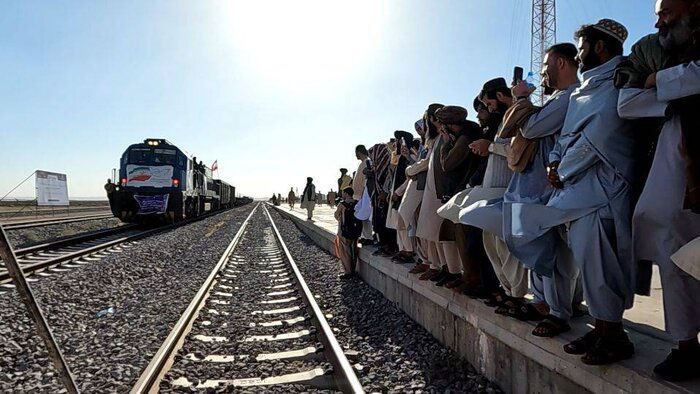
Russian Railways has announced that technical and economic studies of the Afghan-Trans railway project are ongoing with the participation of experts from Russia and Uzbekistan. The project aims to establish a rail corridor connecting Central and South Asia through Afghanistan.
Sergey Pavlov, the Deputy Head of the company, stated at the meeting of the CIS Rail Transport Council in Ashgabat that work on the plan is underway and the parties are engaged in completing its technical reviews. According to him, these studies will lay the groundwork for the practical implementation of the project.
According to the proposed plan, this railway line will start from Termez in Uzbekistan, then pass through Mazar-i-Sharif and Kabul, and ultimately connect to Peshawar in Pakistan. This route could position Afghanistan as a connecting hub between Central and South Asia, playing a key role in expanding regional transit and trade.
The Taliban’s Ministry of Public Works has also announced its readiness to begin technical studies within the country. Mohammad Ashraf Haqshenas, spokesperson for the ministry, stated that a memorandum of understanding for technical studies had previously been signed among Afghanistan, Uzbekistan, and Pakistan, and a company has been selected to carry out these studies.
According to the information provided, the roadmap for implementing this project was first signed in February 2021 in Tashkent among the three countries; however, political developments and the regime change in Afghanistan have slowed its progress. In 2025, a feasibility study agreement was also signed in Kabul between the Taliban’s Ministry of Public Works, Uzbekistan’s Ministry of Transport, and Pakistan’s Railway Ministry.
Several economic experts say that realizing this project could strengthen Afghanistan’s transit position. Mirsakhir Yaqubi, an economic analyst, described Russian cooperation as crucial for developing Afghanistan’s trade links under current conditions. Another economic expert, Abdulzahur Madbar, stated that with the implementation of this plan, transportation costs would decrease and access to regional markets would improve.
However, experts emphasize that such large infrastructure projects require stability, transparency in contracts, and professional management—issues that have consistently been major challenges for national projects in the country in recent years.