From Scattered Fingers to a United Fist: The Lesson of Forty Days of Resistance
Introduction
The history of nations is shaped not in peaceful days but in moments of crisis and through the fire of trials. A war that began with a sudden and devastating attack was not just a military confrontation but a turning point in redefining the collective identity of a nation. After the unjust aggression by America and Israel in the early days of this battle, and the martyrdom of the leader and several top commanders, many foreign analysts predicted a rapid collapse of the political and social structure. However, what happened was contrary to these predictions.
Iran, faced with this heavy blow, not only did not disintegrate but quickly became a model of internal cohesion; a model where society, politics, and military forces intertwined to present the image of a “united fist.” Forty days of continuous resistance ultimately forced the enemy to accept a humiliating defeat and brought it to the negotiating table. This short but decisive period became a symbol of a nation’s ability to turn threats into opportunities.
1. Social and National Solidarity
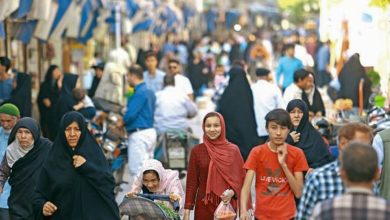
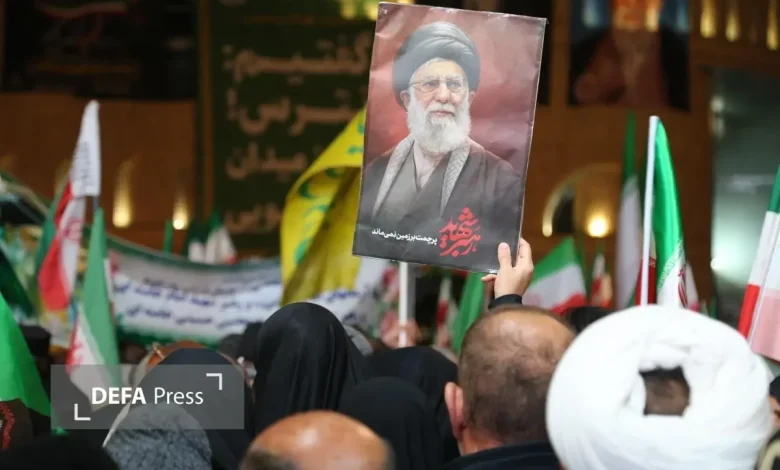
At the onset of the war, the streets became a scene of continuous public presence. Hundreds of thousands of people remained day and night in public spaces; this presence was not merely emotional but carried deep meaning of political participation and defense of national identity, marked by chants that combined enthusiasm and awareness. Political rifts that existed previously in society faded in the shadow of an external threat, and an unprecedented convergence among different groups emerged.
2. Ethnic and Religious Convergence
One of the most prominent features of this period was transcending internal identity boundaries. Various ethnic groups — from Lurs and Turks to Persians, Arabs, and Baluchis — stood side by side. Also, the solidarity between Shia and Sunni Muslims and the bond among the clergy, academics, and merchants demonstrated that in crisis conditions, different layers of society can align on a common path.
3. Transnational and Regional Alliances
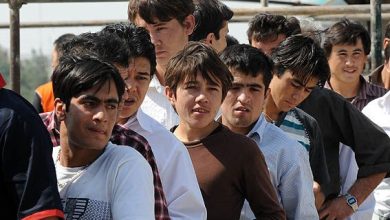
This war quickly went beyond a national conflict to expand regionally. Forces allied with Iran in the region officially and openly declared solidarity. Hezbollah of Lebanon, Ansar Allah of Yemen, Iraq’s Popular Mobilization Forces, and Afghanistan’s Fatemiyoun Division openly entered the fray, each playing a role in this convergence.
This presence was not merely symbolic; it marked the formation of a transnational network of actors operating beyond geographical borders. Such synergy moved the war’s balance away from a bilateral confrontation between Iran, America, and Israel, turning it into a multilayered regional formation.
4. Structural Resilience of the Political System
The martyrdom of the leader and the loss of senior commanders and some political figures could have plunged any system into serious crisis or even total collapse. However, the guidance of the martyred leader Hakim, continued war management, and maintenance of cohesion showed that the political structure had a level of institutionalization that reduced its dependence on individuals. This feature indicates mechanisms that enable decision-making and command continuity even in crisis conditions.
5. Economic Power and Geo-economic Warfare
One of the war’s most important dimensions was the use of economic tools to exert pressure. Controlling and closing the Strait of Hormuz for forty days impacted not only regional dynamics but the global economy. This action showed that in the contemporary world, power is not limited to military capability but that control over economic chokepoints can also serve as a decisive lever.
6. Military Power and Deterrence
Alongside other dimensions, what decisively altered the balance was the combination of advanced military capability with the operational will of the forces. Iran’s missile power, a main pillar of deterrence, with long range and high precision, was able to target the strategic depth of the enemy and demonstrate that the battlefield is not confined to a specific geography.
Extensive development of drone capabilities enabled surveillance, operations, and continuous pressure; a tool that has become key in contemporary wars. Alongside these capabilities, unveiling “missile cities” in robust underground infrastructures—especially within mountains—sent a clear message of long-term preparedness and survival capacity under wartime conditions.
Contrary to claims about weakening defense systems, the continuation of operations and maintenance of defense efficiency, especially at the Isfahan ambush, showed that this capability has not only persisted but has been tested in real conditions. Within this framework, the will of military forces—both the army and the Revolutionary Guard—played a fundamental role; a will based on training, cohesion, and belief in continuing the path. This combination of “hard power” and “human will” elevated the concept of deterrence from mere equipment to a deeper level of resilience and continuity.
Conceptual Summary: From Scattered Fingers to a United Fist
What makes this period a distinct historical experience is not merely the occurrence of a war or even victory in it; rather, it is the process of internal transformation within a society. A society that in normal times is composed of diverse views, sometimes harmful disagreements, ethnic differences, and a variety of interests, reached in the face of a common threat a level of convergence that can be called a “redefinition of the nation in times of crisis,” reflecting the intellectual and political maturity of the proud Iranian nation.
The metaphor of the “fist” is not just a symbolic image; it expresses a socio-political logic: fingers, while scattered, each have limited function, but when pressed in a common direction, they become a tool of power. This transformation does not occur randomly but results from the bond between collective awareness, historical experience, and organized structures.
The forty days of resistance were not merely a time span but a concentrated historical experience in which society, the political system, and military forces, in an exceptional synergy, moved from a stage of “reaction” to “effective action.” The outcome of this process was the affirmation that in the contemporary world, real power does not lie in isolated elements but in the convergence of elements—where fingers unite into a fist.
Seyed Hamidollah Hashemi